
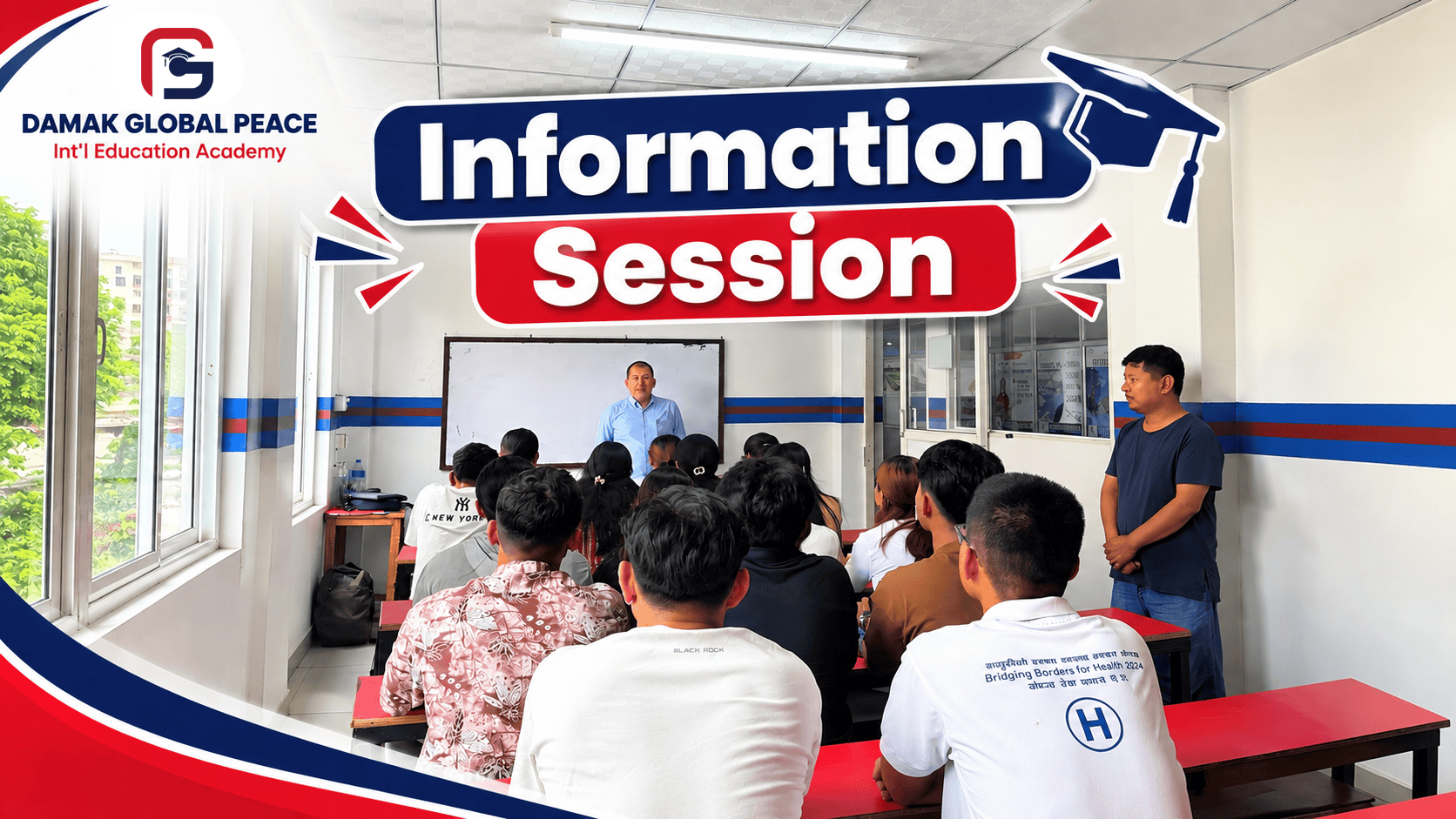
Japan Student Visa from Nepal: Complete Guide for Students in Damak
Are you planning to study in Japan from Nepal? If you have completed +2 or a Bachelor’s degree and want to explore educational opportunities in Japan, understanding the admission process, Japanese language requirements, financial documents, visa procedures, and living expenses is an important first step.
Damak Global Peace Int’l Education Academy Pvt. Ltd. provides Japanese language education and study-abroad preparation support for students interested in studying in Japan.
Students from Damak, Birtamod, Kakarbhitta, Chandragadhi, Ilam, Panchthar, Taplejung, and other parts of eastern Nepal can enquire about Japanese language classes, interview preparation, school application guidance, and available student visa support.
This guide covers the Japan Student Visa process from Nepal, application costs, processing time, age-related questions, required documents, Japanese N5, N4, N3 and Irodori classes, and important information about studying and living in Japan.
1. What Is a Japan Student Visa?
A Japan Student Visa is issued to eligible applicants who intend to study at an educational institution in Japan and meet the relevant immigration and visa requirements.
Depending on the applicant’s plans, the intended institution may be a Japanese language school, university, graduate school, junior college, or qualifying vocational institution.
Students should select an appropriate school and course before starting the application process. Admission requirements, course duration, tuition fees, and language expectations vary by institution.
Official resource: https://www.studyinjapan.go.jp/en/planning/immigration-procedures/
2. Who Can Apply for a Japan Student Visa from Nepal?
Applicants who meet the admission requirements of an eligible Japanese educational institution may explore a Japan Student Visa from Nepal.
Eligibility is assessed according to the applicant’s academic background, intended course, financial circumstances, supporting documents, and the requirements applicable to the school and immigration process.
Students may include:
- Applicants who have completed +2 and wish to continue their education in Japan.
- Applicants who have completed a Bachelor’s degree and wish to pursue further study.
- Applicants who meet the academic and other requirements of a Japanese language school.
- Students seeking to progress to higher education or vocational training after meeting the relevant conditions.
Completing +2 or a Bachelor’s degree does not automatically guarantee admission or a visa. The intended programme and the applicant’s individual circumstances must be assessed.
3. Japan Student Visa Age Limit: Is There a Maximum Age?
One common question is whether Japan has a fixed maximum age for student visa applicants.
Applicants should not assume that a single age limit applies to every Japanese educational institution and every application. Schools may have their own admission policies, and academic history, study gaps, previous qualifications, and the purpose of study may be considered.
What if you have a study gap?
If you have a gap after completing your education, prepare an accurate explanation of what you did during that period and why you now wish to study in Japan.
Depending on the circumstances, supporting evidence of employment, further study, training, or other relevant activities may be helpful if requested.
Can older applicants apply?
An older applicant may explore eligible programmes, but acceptance depends on the institution’s criteria and the applicant’s circumstances. There is no guarantee based on age alone.
Students should ask the intended school about its current admission policy before preparing a full application.
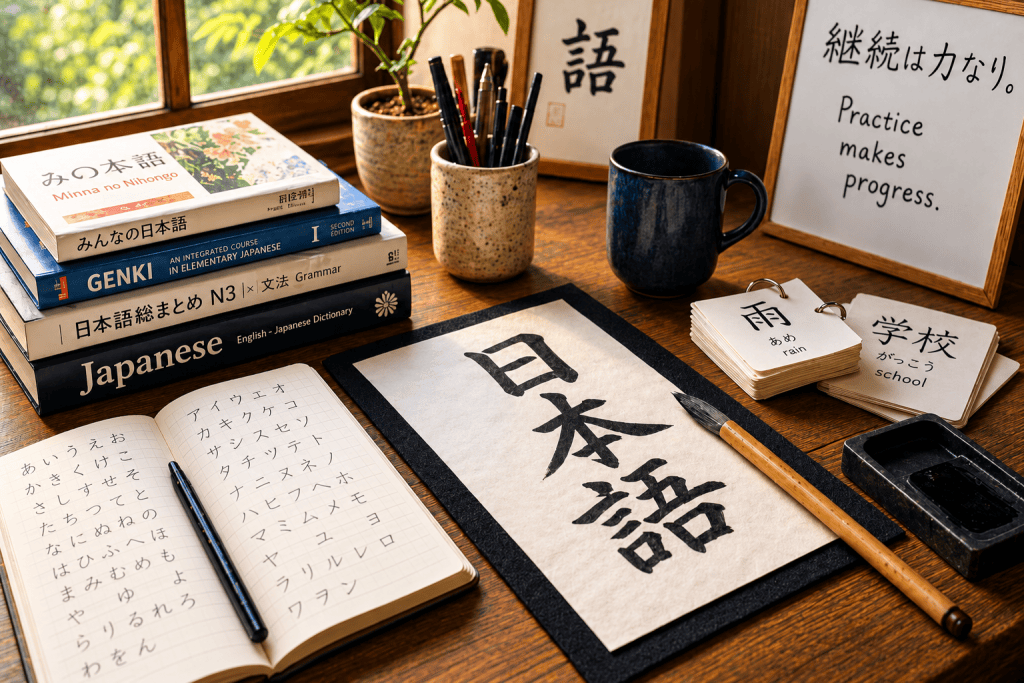
4. Japanese Language Classes in Damak: N5, N4, N3 and Irodori
Japanese language preparation can help students develop communication skills for school interviews, daily life, and further learning in Japan.
Global Peace Damak offers students the opportunity to enquire about Japanese language courses and available preparation support.
Japanese N5 Class
N5 introduces the foundations of Japanese, including:
- Hiragana and katakana.
- Basic vocabulary and grammar.
- Introductory kanji.
- Basic listening and reading practice.
- Simple everyday conversations.
- Revision, tests, and mock examination practice where available.
This level is suitable for learners who are beginning their Japanese language journey.
Japanese N4 Class
N4 builds on the foundational knowledge gained at N5.
Students develop their vocabulary, grammar, kanji, listening, reading, and ability to communicate in familiar everyday situations.
Regular practice and revision help students strengthen their language skills.
Japanese N3 Class
N3 is an intermediate level that develops more advanced reading, listening, vocabulary, grammar, and communication skills.
It can be useful for students who want to strengthen their Japanese before progressing to higher education, vocational training, or other language-learning goals.
The required Japanese level depends on the school, programme, and applicable admission criteria.
Irodori Japanese Language Course
Irodori focuses on practical Japanese communication for everyday life in Japan.
Learners practise situations such as shopping, using transportation, communicating with people, and handling common daily activities.
The appropriate Irodori level and study pathway depend on the learner’s current ability and learning objectives.
Which Japanese course should you choose?
- Beginners can ask about starting with N5.
- Students who have learned basic Japanese can enquire about N4.
- Learners with a stronger foundation can ask whether N3 is suitable.
- Students who want practical communication practice can enquire about Irodori.
Interested in Japanese N5, N4, N3 or Irodori classes in Damak? Contact Global Peace Damak to confirm current batches, course fees, schedules, learning materials, and enrolment availability.
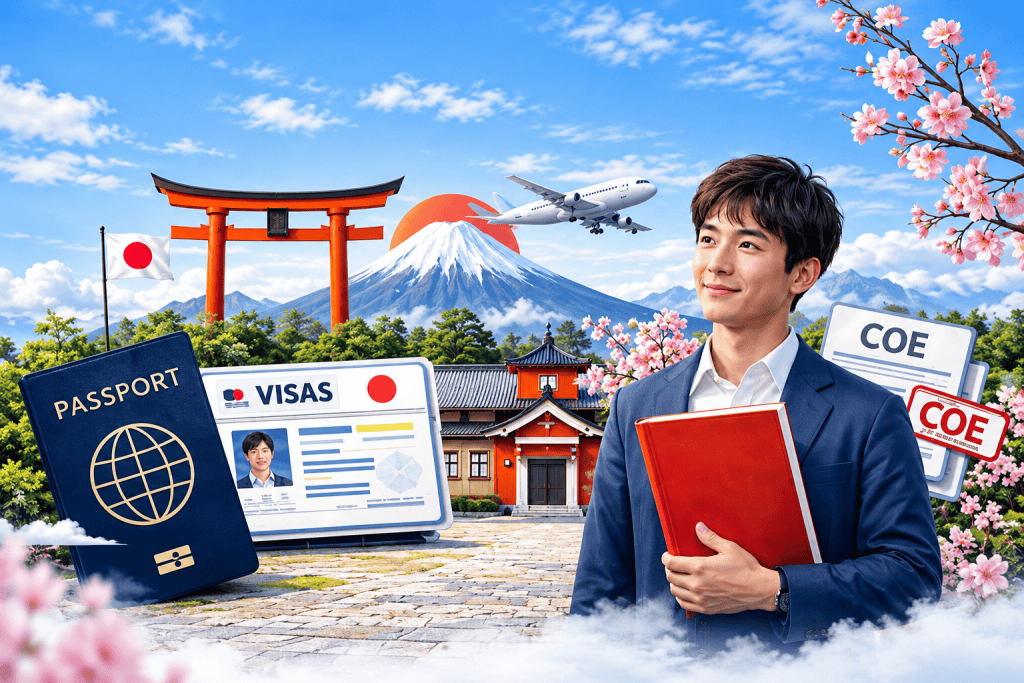
5. Japan Student Visa Requirements: Documents Checklist
The documents required for a Japan Student Visa from Nepal vary according to the school, programme, applicant’s history, and current procedures.
The following is a general preparation checklist, not a universal official checklist for every applicant.
Academic documents
Depending on the applicant’s circumstances and school requirements, these may include:
- Academic certificates and transcripts.
- School or college completion certificates.
- Previous educational records.
- Additional academic explanations or supporting documents where requested.
Identity and application documents
Applicants may need to prepare:
- A valid passport.
- Photographs meeting the applicable specifications.
- School application forms.
- Personal information and study history.
- Other documents requested by the institution or visa application process.
Japanese language documents
Depending on the school and application route, applicants may be asked for Japanese language study records, attendance information, examination results, or other evidence of language ability.
Do not assume that the same language certificate is required in every case. Confirm the intended school’s current criteria.
Financial sponsorship documents
Applicants may need evidence that their tuition and living expenses can be covered during their stay.
Depending on the circumstances, documents may include:
- A financial sponsor’s bank balance certificate.
- Income certificates or other income evidence.
- Evidence of the source of funds.
- Sponsorship or relationship documents.
- Additional financial explanations or records requested by the school or authorities.
Financial documents should be genuine and consistent with the applicant’s circumstances.
Certificate of Eligibility (COE)
The Certificate of Eligibility is an important part of many Japan Student Visa applications. The accepting institution generally assists with the COE application process.
A COE is not the same as a visa and does not guarantee that a visa will be issued.
Official resource: https://www.studyinjapan.go.jp/en/planning/immigration-procedures/
6. Japan Student Visa Application Process from Nepal: 7 Essential Steps
Step 1: Assess your academic background
Review your qualifications, educational history, study objectives, and preferred course.
Step 2: Choose a suitable Japanese school
Research the institution, location, tuition fees, programme, course duration, and admission requirements.
Step 3: Prepare Japanese language skills
Enquire about the Japanese language evidence required by the intended school. Consider suitable N5, N4, N3, or Irodori classes according to your current ability and goals.
Step 4: Prepare your documents
Organise your academic records, identity documents, financial sponsorship evidence, and other materials requested by the school.
Step 5: Apply for admission and COE
Submit the school’s application documents and follow its instructions. Where applicable, the accepting institution assists with the Certificate of Eligibility application.
Step 6: Follow the visa application procedure in Nepal
After the relevant documents are issued, follow the latest visa submission and appointment instructions.
The Embassy of Japan in Nepal states that visa applications are generally handled through VFS Global Services Nepal, with applicants required to follow the relevant appointment and submission procedures.
Official resource: https://www.np.emb-japan.go.jp/itpr_ja/11_000001_00824.html
Step 7: Prepare for departure
After receiving the necessary approvals, arrange accommodation, travel, insurance, initial living expenses, and other practical matters.
Applicants should verify the latest requirements with their school and the relevant authorities throughout the process.
7. Japan Student Visa Cost: How Much Money Do You Need?
The total cost of studying in Japan is not the same for every student. It depends on the educational institution, course, city, accommodation, exchange rate, and personal circumstances.
What costs should you plan for?
Before departure, budget for:
- School application and examination fees, where applicable.
- Admission fees and tuition.
- Japanese language study or preparation costs in Nepal.
- Passport and required document expenses.
- Visa-related expenses.
- Airfare and initial travel arrangements.
- Initial accommodation and housing costs.
After arriving in Japan, students may need to budget for:
- Rent and initial housing expenses.
- Food and daily necessities.
- Electricity, gas, and water.
- Transportation.
- Health insurance and medical expenses.
- Textbooks and study materials.
- Personal expenses and emergency savings.
How much does it cost to live in Japan?
The official Study in Japan website reports an average monthly living cost of approximately ¥105,000, excluding study and research costs, based on the 2023 survey of privately financed international students.
Actual expenses can be higher or lower depending on the city and lifestyle. Rent in Tokyo is generally higher than in many other areas.
Official cost information: https://www.studyinjapan.go.jp/en/life/cost-of-living/
Can you pay all expenses through part-time work?
Students should not rely entirely on future part-time earnings to finance tuition and living expenses.
Job availability, work permission, Japanese ability, school schedules, and local employment conditions can all affect earnings. Prepare a realistic financial plan before applying.
8. Japan Student Visa Processing Time: How Long Does It Take?
There is no single guaranteed processing time that applies to every student visa application.
The overall timeline can depend on:
- The intended school’s application schedule.
- The time required to prepare and verify documents.
- The COE application and examination process.
- The school intake and application deadline.
- Visa appointment availability in Nepal.
- Additional document requests or individual circumstances.
The official Study in Japan timeline recommends beginning preparations well in advance. Its general planning schedule shows school research approximately 10–12 months before the course, school selection by around seven months before, and application around five to seven months before the course starts.
These are planning guidelines rather than guaranteed processing times.
Official resource: https://www.studyinjapan.go.jp/en/planning/flow-chart/schedule.html
Students should confirm the specific intake deadline with their intended school and avoid booking non-refundable travel before the required approvals.
9. Japan Student Visa Interview Preparation
Students should understand their chosen school, course, academic history, financial sponsorship, and reasons for studying in Japan.
Preparation may include:
- Japanese self-introduction.
- Why you want to study in Japan.
- Why you selected a particular school.
- Your academic background and future plans.
- Your financial sponsor and source of funds.
- Explanations of any study gaps.
- Japanese speaking and listening practice.
- Mock interviews and document consistency checks.
Applicants should answer truthfully and consistently with their actual circumstances and submitted documents.
Global Peace Damak can provide information about available language classes, interview preparation, and study-abroad guidance.

10. Life in Japan: Rules Every International Student Should Know
Studying in Japan involves responsibilities as well as educational opportunities.
Students should understand school attendance requirements, residence-status conditions, living expenses, local laws, and employment restrictions.
Part-time work rules
International students must obtain the appropriate permission for activities outside their permitted residence status before undertaking paid work where required.
Under the usual blanket permission, eligible students can generally work up to 28 hours per week during term time. During qualifying long school holidays, the usual limit is up to eight hours per day, subject to the applicable rules and permission.
Students must not exceed their authorised hours or undertake prohibited work. Working beyond the permission conditions can create immigration problems.
Official resource: https://www.moj.go.jp/isa/support/guidance/index.html
Where can students look for part-time jobs?
Depending on their Japanese ability, location, schedule, and permission, students may explore jobs in restaurants, convenience stores, supermarkets, hotels, retail businesses, and other lawful workplaces.
Job availability is not guaranteed. Students should verify the actual work and employer before accepting a position.
Can students change to a working residence status?
A student may be able to change to a suitable work-related residence status if they meet that category’s requirements and receive approval.
Completing +2 or a Bachelor’s degree does not automatically guarantee a change. The job, qualifications, employer, and applicable immigration conditions are important.
Can a student bring family members to Japan?
Do not assume that every student can sponsor a dependent. Eligibility depends on the residence-status rules and the circumstances of the applicant.
The Immigration Services Agency explains that students attending Japanese language institutions are not eligible to bring family members under the ordinary Dependent status in the circumstances described in its official Q&A.
Check the current official guidance before making family arrangements.
Official resource: https://www.moj.go.jp/isa/applications/guide/kanri_qa.html
11. Common Mistakes to Avoid When Applying for a Japan Student Visa
Applicants should avoid:
- Submitting false or altered documents.
- Giving misleading information about academic history or finances.
- Selecting a school without understanding the course or fees.
- Depending entirely on part-time earnings.
- Ignoring school attendance or immigration requirements.
- Relying on unverified claims about guaranteed visas.
- Waiting until the last minute to prepare documents.
- Assuming that every applicant has the same age, language, or financial requirements.
A well-prepared application should reflect the applicant’s genuine educational objectives and actual circumstances.
12. Why Choose Global Peace Damak for Japanese Language Preparation?
Students in Damak and surrounding areas can enquire about Japanese language education and available study-abroad preparation support through Global Peace.
Available areas of enquiry include:
- Japanese N5 classes.
- Japanese N4 classes.
- Japanese N3 classes.
- Irodori Japanese language learning.
- Japanese speaking and listening practice.
- Examination preparation, where available.
- School application guidance.
- Interview preparation and document guidance.
- Current intake information and consultation arrangements.
Students should contact the Damak branch to confirm current fees, class timings, available batches, and the exact services offered.
13. Frequently Asked Questions About Japan Student Visa from Nepal
What is the process for applying for a Japan Student Visa from Nepal?
The general process includes choosing a suitable school, preparing the required documents, applying for admission and a COE where applicable, and following the current visa application procedure in Nepal.
How much does a Japan Student Visa cost?
There is no single total cost for every student. Tuition, living expenses, travel, accommodation, document preparation, and other costs depend on the school and the student’s circumstances.
How long does a Japan Student Visa take to process?
The timeline varies by school, COE processing, document preparation, visa appointment availability, and individual circumstances. Start early and follow the intended school’s intake schedule.
Is there a maximum age for a Japan Student Visa?
Applicants should check the admission policy of the intended school. Do not assume that one universal maximum age applies to every institution and application.
Is Japanese N5 enough to apply for a Japan Student Visa?
Language requirements depend on the intended school, programme, and applicable application route. Confirm the current requirements before applying.
Can I apply after completing +2 in Nepal?
You may explore eligible educational programmes after +2 if you meet the school’s admission requirements and the relevant immigration requirements. Approval is not guaranteed.
Can I work part-time while studying in Japan?
Eligible students with the appropriate permission can generally work up to 28 hours per week during term time, subject to the applicable rules.
Where can I find official information about studying in Japan?
Visit the official Study in Japan website at https://www.studyinjapan.go.jp/en/ and consult the accepting institution and relevant Japanese authorities for current requirements.
Start Your Japan Study Preparation with Global Peace Damak
Planning to study in Japan? Start by assessing your academic background, researching suitable schools, preparing your Japanese language skills, and planning your finances.
Global Peace Int’l Education Academy Pvt. Ltd. – Damak welcomes enquiries from students interested in Japanese N5, N4, N3, Irodori, interview preparation, and available study-abroad guidance.
Contact the Damak branch to enquire about current course fees, class schedules, admission availability, and consultation arrangements.
Global Peace Damak – Japanese Language Education and Study Abroad Preparation
https://damak.globalpeace.com.np/
Disclaimer: This article provides general educational information and does not guarantee school admission, COE issuance, visa approval, employment, or any immigration outcome. Requirements may change. Always confirm the latest information with the intended educational institution, the Embassy of Japan in Nepal, VFS Global Nepal, or the relevant Japanese immigration authorities.