
Japan
Table of Contents
Japan has become one of the most preferred study destinations for Nepali students who are looking for quality education, global exposure, and long-term career growth. With its advanced technology, disciplined lifestyle, globally respected education system, and strong employment opportunities, Japan offers a complete academic and professional environment for international students.
Global Peace International Education Academy is committed to helping Nepali students turn their dream of studying in Japan into reality. From proper counselling and Japanese language preparation to university selection, documentation, visa processing, and post-arrival guidance, we provide complete support throughout your study abroad journey.
Whether you are planning to study Japanese language, enroll in a diploma course, pursue a bachelor’s degree, or continue with postgraduate studies, Global Peace International Education Academy ensures that you receive accurate guidance based on your academic background, financial capacity, and career goals.
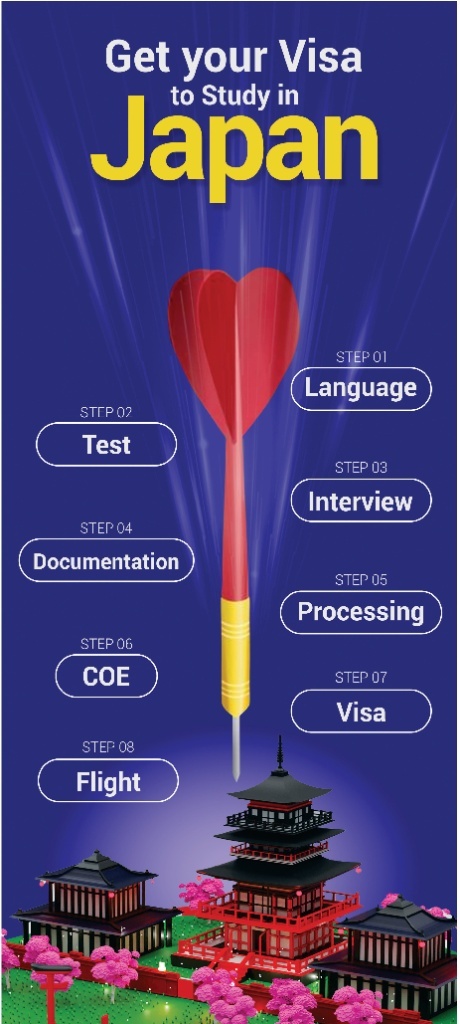
Why Japan is an Excellent Study Destination for Nepali Students
Japan offers a unique combination of academic excellence, cultural richness, safety, and professional development opportunities. For Nepali students, Japan is not only a place to study but also a country where they can develop discipline, independence, and global competitiveness.
World-Class Education System
Japan is home to some of the world’s most respected universities and research institutions. Japanese education focuses on practical skills, research-based learning, and innovation. Students benefit from modern laboratories, advanced technology, and industry-oriented curriculum. Fields such as engineering, robotics, information technology, biotechnology, business management, and environmental science are particularly strong in Japan.
Many universities also collaborate with industries, which allows students to gain real-world experience through internships, training programs, and research projects.
Globally Recognised Degrees
Degrees obtained from Japanese universities are recognised internationally. Graduates can pursue careers not only in Japan but also in multinational companies across Asia, Europe, Australia, and North America. A Japanese degree combined with Japanese language proficiency significantly increases global employability.
For students planning long-term settlement or professional growth in Japan, academic qualifications from Japanese institutions play a crucial role in work visa and job placement opportunities.
Safe and Student-Friendly Environment
Japan consistently ranks among the safest countries in the world. Crime rates are extremely low, public transport is reliable, and healthcare facilities are well-developed. For Nepali students living away from home for the first time, Japan provides a secure and organised environment that supports both academic focus and personal well-being.
Cities are well connected through efficient transportation systems, making it easy for students to commute to universities, workplaces, and accommodation.
Cultural Diversity and Personal Development
Studying in Japan allows students to experience a culture that blends tradition and modernity. Students participate in festivals, cultural programs, and community activities while also enjoying modern lifestyle, entertainment, and technology.
This cultural exposure helps students develop adaptability, communication skills, and global awareness, which are essential qualities for future careers.
Opportunity to Learn a Valuable Language
Japanese is one of the most valuable foreign languages in the global job market. Learning Japanese opens doors to careers in translation, tourism, international business, IT companies, manufacturing industries, and diplomatic services.
Most universities and language schools offer structured Japanese language courses to support international students at different proficiency levels.
When to Apply for Japan: Intakes Explained
Japan has four intakes: January, April, July, and October. Click on the cards below to know more about each intake.
The January intake is ideal for students who want to start their studies early in the year.
It usually offers fewer seats compared to other intakes, so early application is important.
Students get enough time to adjust before the main academic rush.
This intake is suitable for those who recently completed their studies.
Course Duration: 15 months.
April is the primary intake in Japan with the highest number of courses and universities available.
Most academic programs and language schools begin during this period.
Students get better chances of admission and more subject options.
It also matches the Japanese academic calendar.
Course Duration: 24 months.
The July intake is good for students who miss the April intake but still want to apply within the same year.
It offers a moderate number of courses and institutions.
Students can prepare for higher studies or job opportunities after language training.
This intake is suitable for fast academic planners.
Course Duration: 21 months.
The October intake is another popular option after April.
Many language schools and selected universities accept students during this period.
It is helpful for students who need more time to prepare documents and finances.
Students can smoothly transition into the next academic cycle.
Course Duration: 18 months.
Why Choose Global Peace International Education Academy for Japan?
Choosing the right consultancy plays a major role in the success of your study abroad plan. Global Peace International Education Academy follows a student-focused approach, ensuring transparency, ethical counselling, and long-term career planning.
Personalised Career Counselling
Every student has different academic records, financial conditions, and career ambitions. Our counsellors carefully analyse each student’s profile before recommending suitable courses, institutions, and study pathways in Japan.
We focus on long-term outcomes, not just admission and visa approval.
Japanese Language Preparation Guidance
Japanese language proficiency is one of the most important requirements for studying and working in Japan. We guide students on language training options, JLPT preparation, and selecting language schools that meet visa and academic requirements.
Students receive clear guidance on how to progress from language studies to higher education programs.
University and College Selection
University and College Selection
Japan has thousands of institutions offering different programs. We help students choose universities based on:
Course availability
Language requirements
Location and cost of living
Internship opportunities
Future employment prospects
This ensures students do not face difficulties after arriving in Japan.
Complete Documentation and Visa Assistance
Visa rejection often happens due to incomplete or incorrect documentation. Our team assists students in preparing:
Statement of Purpose (SOP)
Sponsorship documents
Financial proofs
Academic verification
COE processing coordination
We ensure every document meets embassy and immigration standards.
Pre-Departure and Post-Arrival Support
Our responsibility does not end after visa approval. We provide guidance on:
Accommodation arrangements
Airport pickup support (where available)
Work regulations for students
Cultural orientation
Local community connections
This helps students settle smoothly in a new country.
Requirements to Study in Japan from Nepal
Academic Requirements
Completion of +2 or higher education
GPA generally between 2.5 to 3.0 depending on institution and program
For Master’s programs, relevant Bachelor’s degree is required
Japanese Language Requirements
JLPT N5 generally required for language schools
Higher levels required for degree programs
Some English-taught programs require IELTS or TOEFL instead
Financial Requirements
Students must demonstrate financial capability to cover:
Tuition fees
Living expenses
Accommodation costs
This is required for both university admission and visa processing.
General Documents Required
Passport
Academic transcripts and certificates
Citizenship certificate (translated)
Birth certificate
Sponsorship documents
Income verification
Bank statements
SOP and recommendation letters
Popular Courses in Japan for Nepali Students
Technology and Engineering
Mechanical Engineering
Electrical Engineering
Robotics and Automation
Information Technology
Artificial Intelligence
Business and Management
Business Administration
International Business
Accounting and Finance
Marketing and Entrepreneurship
Health and Science
Pharmaceutical Science
Biotechnology
Environmental Science
Food Science
Arts and Social Sciences
Japanese Language Studies
Liberal Arts
International Relations
Cultural Studies
Students can move from language programs to degree courses depending on academic performance and language improvement.
Cost of Studying and Living in Japan
Studying in Japan is comparatively affordable compared to Western countries, especially considering education quality and employment opportunities.
Language schools: ¥500,000 – ¥800,000 per year
Undergraduate programs: ¥500,000 – ¥1,000,000 per year
Postgraduate programs: ¥300,000 – ¥1,200,000 per year
Dormitories: ¥30,000 – ¥50,000
Shared apartments: ¥30,000 – ¥60,000
Private apartments: ¥50,000 – ¥80,000
Food: ¥20,000 – ¥30,000
Utilities and Internet: ¥14,000 – ¥20,000
Transport: ¥10,000 – ¥15,000
Personal and study expenses: ¥20,000 – ¥30,000
Total monthly expenses: approximately ¥90,000 – ¥180,000
Scholarships for Nepali Students in Japan
Many students reduce financial burden through scholarships.
Major Scholarship Options
MEXT Scholarship – fully funded government scholarship
JASSO Scholarship – monthly allowance support
University-Specific Scholarships – based on merit and need
Private Foundations and Exchange Programs
Our counsellors guide eligible students in scholarship application procedures.
Part-Time Work Opportunities in Japan
International students in Japan are legally allowed to work part-time.
Up to 28 hours per week during classes
Full-time during vacations
Common jobs: convenience stores, restaurants, factories, warehouses, cleaning services
Part-time income helps cover daily living expenses and improves language skills through real-life interaction.
Career Opportunities After Graduation
Graduates in Japan can apply for work visas in fields such as:
Engineering and IT
Business and trade
Healthcare support
Hospitality and tourism
Education and translation services
Japanese employers value discipline, technical skills, and language ability. Students who perform well academically and linguistically have strong chances of employment after graduation.
Final Thoughts