

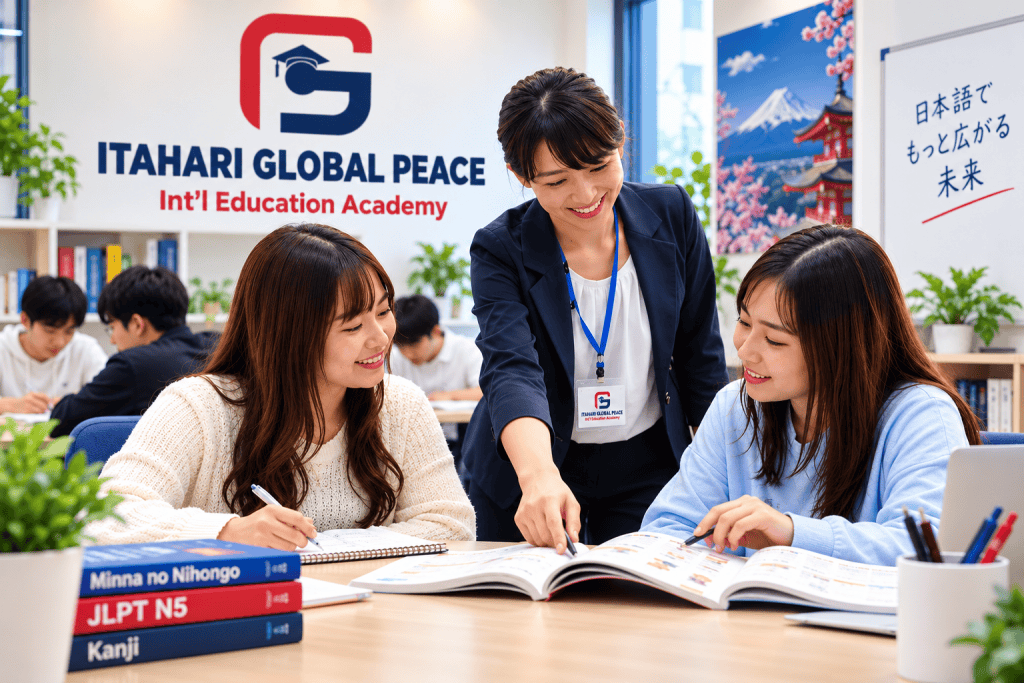
Are you planning to study in Japan from Nepal? If you have completed your +2, or Bachelor’s degree and want to explore educational opportunities in Japan, understanding Japanese language requirements, school admission procedures, student visa documentation, living expenses, and career opportunities is essential.
Itahari Global Peace Int’l Education Academy Pvt. Ltd. provides Japanese language education and study-abroad preparation support for students interested in studying in Japan.
Students from Itahari, Dharan, Inaruwa, Gaighat, Khotang, Sankhuwasabha, Bhojpur, and Dhankuta can enquire about Japanese language classes, interview preparation, school application guidance, and available visa-related support.
This complete guide explains how to prepare for a Japan Student Visa from Nepal and what students should know about studying, working part-time, changing residence status, bringing eligible dependents, and applying for permanent residency in Japan.
Why Study in Japan from Nepal?
Japan offers educational opportunities through Japanese language schools, vocational colleges, universities, and postgraduate programmes.
Students choose Japan to develop Japanese language skills, pursue further education, acquire professional knowledge, and gain international experience.
Before applying, research the school, course duration, tuition fees, accommodation, living expenses, and future career opportunities. You should have a realistic financial plan rather than relying entirely on part-time employment.
Japanese Language Classes in Itahari: N5, N4 and Irodori
Learning Japanese can help students prepare for school admission, daily communication, and life in Japan.
Japanese N5 Class
The N5 level introduces hiragana, katakana, basic kanji, vocabulary, grammar, listening, and simple Japanese conversations. It provides a foundation for further language study.
Japanese N4 Class
The N4 level builds on N5 knowledge through more advanced vocabulary, grammar, reading, listening, kanji, and everyday communication practice.
Irodori Japanese Course
Irodori focuses on practical Japanese communication for everyday life in Japan. Students can practise common situations such as shopping, transportation, daily activities, and communication at work.
The appropriate course depends on your current Japanese level, learning objectives, and the requirements of your intended school or programme.
Interested in Japanese N5, N4 or Irodori classes in Itahari? Contact Global Peace Itahari to enquire about current class schedules, fees, available batches, and enrolment.
Japan Student Visa Requirements for Nepali Students
Students who meet the admission requirements of an eligible Japanese educational institution can explore the student visa application process.
Depending on the school and the applicant’s circumstances, the documents may include:
- Valid passport and identification documents.
- Academic certificates and transcripts.
- Japanese language study records or language proficiency evidence, where required.
- Financial sponsorship documents and evidence of the source of funds.
- School application forms and admission-related documents.
- Study objectives and explanations of future plans, where requested.
- Additional documents required for the Certificate of Eligibility (COE) and visa application.
Requirements vary according to the school, programme, academic background, and current immigration procedures.
Admission, COE issuance, and visa approval are separate decisions. Meeting basic requirements does not guarantee approval.
https://www.studyinjapan.go.jp/en/?utm_source=chatgpt.com
Japan Student Visa from Nepal: Application Process
Japan Student Visa from Nepal: 7 Essential Steps | Global Peace Itahari
Step 1: Assess Your Eligibility
Review your academic background, Japanese language level, preferred intake, budget, and study objectives.
Step 2: Choose a Suitable School
Research the school’s location, tuition fees, programme, admission criteria, facilities, and student support services.
Step 3: Prepare Japanese Language Skills
Study the Japanese language level required by the school and prepare the relevant language evidence.
Step 4: Prepare Documents
Organise your academic records, identity documents, financial sponsorship evidence, and other documents requested by the school.
Step 5: Apply for Admission and COE
The accepting institution generally assists with the Certificate of Eligibility process. The COE is not itself a visa and does not guarantee that a visa will be issued.
Step 6: Follow the Visa Application Procedure
Follow the current instructions for visa applications in Nepal, including the applicable submission and appointment arrangements.
Step 7: Prepare for Departure
After the necessary approvals, plan your accommodation, travel, insurance, initial living expenses, and arrival arrangements.
Always verify the latest requirements with the accepting school and relevant Japanese authorities.
Japan Student Visa Interview Preparation
Students should understand their intended school, chosen course, academic history, financial sponsorship, and reasons for studying in Japan.
Interview preparation may include:
- Japanese self-introduction.
- Reasons for choosing Japan.
- Reasons for selecting a particular school.
- Questions about academic history and study gaps.
- Financial sponsor and source-of-funds explanations.
- Future educational and career plans.
- Japanese speaking, listening, and mock interview practice.
Applicants should answer truthfully and consistently with their actual circumstances and submitted documents.
Global Peace Itahari can provide information about currently available Japanese language classes, interview preparation, and study-abroad guidance.
Cost of Studying and Living in Japan
The cost of studying in Japan depends on the institution, city, course, accommodation, and personal lifestyle.
Plan for tuition, admission fees, accommodation, food, transportation, utilities, insurance, airfare, and initial settlement expenses.
Request a current fee schedule from your intended school and prepare a realistic budget before applying. Part-time employment is not guaranteed and should not be treated as your only source of financial support.
Part-Time Jobs for International Students in Japan
International students must follow the conditions of their residence status and obtain permission for activities outside their permitted status when required.
Under the usual blanket permission, eligible students can generally work up to 28 hours per week during term time. During qualifying long school holidays, the usual limit is up to eight hours per day, subject to the applicable rules.
Possible jobs, depending on the student’s Japanese ability, location, schedule, and permission, include restaurants, convenience stores, supermarkets, hotels, retail businesses, and certain warehouse roles.
Not every job is permitted. Students must avoid prohibited work, follow their permission conditions, and ensure that employment does not interfere with attendance and studies.
Can You Change from a Student Visa to a Working Visa?
Changing to a work-related residence status depends on the job, qualifications, employer, and requirements of the relevant category.
For example, the Engineer/Specialist in Humanities/International Services category has specific requirements relating to professional duties, education or experience, and other eligibility criteria.
Completing +2 or a Bachelor’s degree does not automatically guarantee a change of status. Applicants should identify a suitable career pathway and verify the requirements before accepting employment.
Japan Dependent Visa: Who Can Apply?
An eligible student may be able to apply for Dependent status for a qualifying spouse or child, subject to immigration requirements and the family’s circumstances.
Financial ability, proof of relationship, supporting documents, and the student’s residence status may be relevant. Parents and siblings do not automatically qualify under the ordinary Dependent category.
A dependent generally needs permission to undertake paid work. Under the usual blanket permission, eligible dependents can generally work up to 28 hours per week, subject to the permission conditions. Full-time employment may require a different residence status or other applicable authorisation.
Japan Permanent Residency (PR): Requirements
Permanent residency is different from student status, dependent status, and a work-related residence status.
Under the general rule, applicants ordinarily need at least ten years of continuous residence in Japan, including at least five continuous years under qualifying work-related or residence-related statuses. Special routes and exceptions apply to certain categories.
Other considerations include conduct, financial stability, tax and social insurance obligations, and compliance with immigration rules.
Residence duration alone does not guarantee PR approval. Check the latest Immigration Services Agency guidance before applying because the requirements and relevant guidelines may change.
Japan SSW Visa and Other Work Opportunities
The Specified Skilled Worker (SSW) system is a separate pathway for eligible foreign workers in designated fields.
Depending on the field and applicable category, requirements may include skills examinations, Japanese language tests, qualifying employment, and other conditions.
A student visa, SSW status, and professional work-related status are different. Choose the pathway that matches your qualifications and career objectives.
https://www.moj.go.jp/isa/?utm_source=chatgpt.com
Why Contact Global Peace Itahari?
Students in eastern Nepal can enquire about the following services available through Global Peace Itahari:
- Japanese N5 and N4 language classes.
- Irodori and practical Japanese language learning.
- Language examination preparation.
- Interview practice and mock interviews.
- Japanese school application guidance.
- Student visa documentation and process guidance.
- Information about SSW and other available visa-related support.
- Current course fees, class schedules, and admission availability.
Students from Itahari, Dharan, Inaruwa, Gaighat, Khotang, Sankhuwasabha, Bhojpur, and Dhankuta can contact the branch to discuss their study objectives and suitable preparation options.
Frequently Asked Questions
Can I apply for a Japan Student Visa after +2 in Nepal?
You may apply to suitable Japanese educational programmes if you meet their admission and immigration requirements. Approval depends on your individual circumstances.
Is Japanese N5 enough for a Japan Student Visa?
Not necessarily. Language evidence requirements depend on the institution, programme, application route, and current rules.
How many hours can a student work in Japan?
Eligible students with the appropriate permission can generally work up to 28 hours per week during term time, subject to the applicable conditions.
Can a student change to a working visa after graduation?
A change may be possible if the applicant meets the requirements for the intended residence status and receives approval. Graduation alone does not guarantee a change.
Can a dependent work in Japan?
Eligible dependents may generally work up to 28 hours per week under the usual blanket permission. They must confirm the conditions applicable to their status and permission.
How can I begin preparing for Japan from Itahari?
Start by reviewing your academic background, learning Japanese, researching schools, planning your finances, and checking the current application requirements.
Start Your Japan Study Preparation Today
Planning to study in Japan? Contact Global Peace Int’l Education Academy Pvt. Ltd., Itahari, to enquire about Japanese language classes, interview preparation, school application guidance, and currently available services.
https://www.np.emb-japan.go.jp/itprtop_ja/index.html
Global Peace Itahari – Japanese Language Education and Study Abroad Preparation
Contact the Itahari branch for current course fees, class schedules, intake information, and consultation arrangements.
https://itahari.globalpeace.com.np/