
Notice

blogs

What is COE Japan Visa

What is COE Japan Visa? The Certificate of Eligibility (COE) is an official document issued by the Japanese Immigration Bureau. It confirms that a foreign national meets the conditions required to stay in Japan under a specific visa category such as student, work, dependent, or skilled worker. COE is not a visa itself. Instead, it is a pre-approval document that allows you to apply for a visa at the Japanese Embassy or VFS in your country. Without COE, you cannot proceed with long-term visa application for Japan. Why COE is Important: Confirms your eligibility before visa processing Speeds up visa approval at embassy Reduces risk of rejection Required for student and work visas Understanding what is COE Japan visa is the first step before starting your Japan journey. How the COE Process Works The path to obtaining your COE involves a collaborative effort between you and your Japanese sponsor (such as an employer, school, or family member). Unlike a standard tourist visa, you cannot apply for a COE directly from outside Japan; your sponsor must submit the application to the Regional Immigration Bureau within Japan on your behalf. +1 Once the Immigration Bureau meticulously reviews your background and the legitimacy of your sponsor, they issue the physical (or electronic) COE. This document serves as a “green light,” signaling to the Ministry of Foreign Affairs that your entry into the country is pre-validated. Read More : How to Get COE for Japan Essential Steps to Obtain Your COE Secure Sponsorship: You must first have a job offer, an enrollment letter from a school, or a legal relationship with a resident in Japan. Document Submission: Your sponsor submits your personal documents, qualifications, and the “Application for Certificate of Eligibility” to the local immigration office. Screening Period: This typically takes between 1 to 3 months, depending on the visa category and the current workload of the immigration office. Issuance and Delivery: Once approved, the COE is sent to your sponsor, who then forwards it to you in your home country. Visa Conversion: You take the COE to your nearest Japanese Embassy or Consulate to have the actual visa sticker placed in your passport. Key Validity and Deadlines It is crucial to note that a COE has an expiration date. Generally, it is valid for three months from the date of issuance. You must enter Japan within this three-month window after the visa is issued; otherwise, the document becomes void, and the entire process must be restarted. Read more : What to do after Getting COE +2 Common Categories Requiring a COE Work Visas: Highly Skilled Professional, Engineer/Specialist in Humanities, Skilled Labor, and Intra-company Transferee. Academic Visas: Student visas for language schools, vocational colleges, or universities. Family Visas: Dependent visas for spouses and children of foreign residents. Specialized Visas: Religious activities, journalists, or legal/accounting services. Important Considerations: Digital COEs and Avoiding Rejection While the physical COE remains standard, the Digital Certificate of Eligibility (Digital COE) has become increasingly popular since 2023. If your sponsor receives an electronic version, they will simply forward the PDF to you via email. You can then print this file to present at the Japanese Embassy or Consulate. This modern approach eliminates the need for expensive and time-consuming international couriers, significantly streamlining your journey. Read more : COE Japan Troubleshooting and Common Pitfalls Expiration Management: A COE is strictly valid for three months from the date of issuance. If you fail to apply for your visa within this window, the document becomes void, and you must start the entire process again. There is generally no extension for an expired COE. Accuracy is Critical: The most common reason for rejection is inconsistent or incomplete documentation. Even minor discrepancies—such as a name spelled differently on your application than on your passport, or unexplained gaps in your employment or academic history—can raise red flags. Ensure your financial documents, such as bank statements, demonstrate a stable, consistent history rather than a single large deposit. Rejection Procedures: If your COE is denied, the Immigration Bureau will typically provide a brief notice of non-issuance. While they won’t always give a detailed explanation, you should immediately review your paperwork with your sponsor to identify errors or missing information before attempting a re-application. Always remember that receiving a COE is a significant milestone, but it is not a final guarantee of entry. The Japanese Embassy reserves the right to request additional documentation during your final visa interview to confirm your intent and financial readiness.

What is COE Japan Visa Read More »
How to Get COE for Japan: A Complete 2026 Guide

How to Get COE for Japan: A Complete 2026 Guide Understanding how to get a COE for Japan is the most critical hurdle for anyone planning to live, work, or study in the Land of the Rising Sun. While many think the visa application starts at the embassy, the real work happens months earlier within Japan’s Immigration Bureau. This guide breaks down the updated 2026 process, ensuring your application is SEO-optimized and ready for success. Who Actually Applies for the COE? A common misconception is that the traveler applies for the COE directly. In reality, the Certificate of Eligibility (COE) must be sponsored by an entity already based in Japan. For Student Visas: Your Japanese language school, college, or university acts as your proxy. For Work Visas: Your future Japanese employer (the hiring company) submits the paperwork. For Dependent Visas: Your spouse or family member currently residing in Japan serves as the sponsor. Step-by-Step Process: How to Get COE for Japan 1. Secure an Offer or Admission Before you can even mention a COE, you must have a legal reason to enter. This means receiving an official Letter of Intent from an employer or a Letter of Acceptance from an educational institution. 2. Document Compilation (The Critical Phase) You will send your personal documents to your sponsor in Japan. Since 2025, Japan has tightened its scrutiny on financial records. Ensure all documents are translated into Japanese if they are in another language. Proof of Funds: You must show roughly ¥2,000,000 ($13,500 approx.) in liquid assets for a one-year stay. Educational History: Original diplomas or graduation certificates. Digital Photo: A clear, 4cm x 3cm photo taken against a plain white background within the last 3 months. 3. Sponsor Submits to Immigration Your sponsor takes your dossier to the Regional Immigration Services Bureau (e.g., Tokyo, Osaka, or Nagoya). They will file the Application for Certificate of Eligibility. 4. The Screening Period (Wait Time) In 2026, standard processing times generally range from 1 to 3 months. However, high-volume offices like Shinagawa (Tokyo) can sometimes take longer. During this time, immigration officers may request “Additional Documents” to clarify your financial background or work history. 5. Issuance of the Digital COE (e-COE) Once approved, the Immigration Bureau issues the COE. While paper versions still exist, most sponsors now receive an Electronic COE (e-COE) via email. Your sponsor will forward this PDF to you immediately—no more waiting for international couriers! Read more : What do to after getting COE Checklist of Required Documents Document Type Requirement Details Passport Copy Must show your photo, name, and validity (at least 6 months remaining). COE Application Form Completed by you and your sponsor with matching information. Financial Support Bank balance certificates and 3–6 months of transaction history. Academic Records Highest degree obtained; some categories require JLPT certificates. Sponsor Profile Company registration (Tohon) or school license. Why Applications Get Rejected (And How to Avoid It) The Japanese Immigration Bureau is known for its “microscopic scrutiny.” Even a small error can lead to a denial. The “Sudden Deposit” Red Flag: Do not transfer a large sum of money into your bank account right before printing your statement. Immigration looks for organic savings, not borrowed funds. Inconsistency: If your resume says you worked at Company A, but your tax documents show Company B, your COE will likely be rejected for “lack of credibility.” Weak Sponsorship: For student visas, using a “friend” or “distant relative” as a financial guarantor is a high-risk move. First-degree relatives (parents) have the highest approval rates. Read more : What to do if your coe is rejected  Final Step: From COE to Visa Once the COE is in your hands (or your inbox), it is valid for 3 months. You must take it to your local Japanese Embassy or VFS Global center. The embassy will verify the COE and place the actual Visa Sticker in your passport, usually within 5–7 working days. Click here Read more about COE from Official Japanese Website

How to Get COE for Japan: A Complete 2026 Guide Read More »

What to Do After COE Rejection Japan

What to Do After COE Rejection Japan : Complete Student and SSW Pathway Guide Receiving a Certificate of Eligibility (COE) rejection can feel discouraging for students planning to study in Japan. However, COE rejection does not mean the end of your Japan journey. Many applicants successfully reach Japan even after rejection by understanding the reason and choosing the correct next step. This guide explains what to do after COE rejection Japan, including the recommended re-application process and an alternative pathway through the Specified Skilled Worker (SSW) visa. Understanding COE Rejection A Certificate of Eligibility is issued by Japanese Immigration to confirm that a foreign national meets the requirements for residence in Japan. When a COE is rejected, it usually indicates issues with documentation, financial proof, or application clarity rather than complete ineligibility. Therefore, the first step is not panic but analysis. Understanding why rejection occurred helps determine the most effective solution. Option 1: Re-Apply for Student COE (First Priority and Recommended) Re-application remains the safest and most recommended option for students whose COE has been rejected. In many cases, rejection occurs due to correctable mistakes rather than fundamental problems. Read More : Japanese Student Visa Guide Common Reasons for COE Rejection Incomplete or incorrect documents are among the most frequent causes of rejection. Financial documentation problems such as insufficient bank balance, unclear income sources, or inconsistent statements can also lead to refusal. Sponsor verification issues may arise if income proof or relationship documentation is unclear. Additionally, weak explanation letters, inconsistent academic plans, or simple form errors can negatively affect the application outcome. Steps to Take for Re-Application Applicants should carefully review the rejection reason communicated through their school or immigration feedback. Every identified mistake must be corrected before preparing a new application. Financial proof should be strengthened through improved bank balance, verified income documents, tax records, or sponsor clarification. Supporting documents such as study plans and explanation letters should be rewritten to present a clear academic intention. Consultation with your Japanese school or professional consultancy can provide structured guidance during this stage. After corrections are completed, students can proceed with re-application through their school. Many applicants receive approval in subsequent applications once documentation issues are resolved, making this pathway highly effective. Option 2: Apply for SSW Visa if Re-Application Is Not Possible If re-application for student COE is not feasible, applicants can consider the Specified Skilled Worker (SSW) visa as an alternative legal pathway to Japan. This visa allows foreign nationals to work and reside in Japan under specific skill categories. The SSW pathway is particularly suitable for individuals interested in employment rather than academic study. SSW Visa Requirements and Process The SSW visa involves several structured steps including language qualification, skill examination, employment acquisition, and visa application. Learn More : SSW Japan  Step 1: Japanese Language Requirement Applicants must demonstrate basic Japanese communication ability by completing one of the accepted language qualifications. This may include passing JLPT N4 or higher, achieving JFT-Basic A2 level, or completing a Japanese language course equivalent to N4 level. Language qualification confirms that applicants can understand everyday instructions and workplace communication. Step 2: Skill Test (Technical Examination) After fulfilling language requirements, applicants must pass a technical skill test related to their chosen work category. These examinations assess job-specific knowledge and practical understanding required for employment in Japan. Available work sectors include caregiver services, restaurant and food service, agriculture, construction, manufacturing, hotel and hospitality, cleaning, aviation, shipbuilding, automobile maintenance, and other designated industries. Applicants can select categories based on interest, previous experience, or job demand. Step 3: Obtain Job Offer from Japanese Company Once both language and skill tests are passed, applicants can apply for employment opportunities with Japanese companies operating under the SSW program. A confirmed job offer is necessary for visa processing. Employers often provide support during documentation and immigration procedures. Step 4: Apply for SSW COE and Visa After securing employment, the employer typically applies for the SSW Certificate of Eligibility on behalf of the applicant. Following COE approval, the applicant can apply for the SSW visa from their home country. Upon visa approval, travel to Japan for employment becomes possible. Benefits of Choosing SSW Visa The SSW visa offers several advantages for applicants seeking work opportunities in Japan. It provides legal employment status with competitive salary and employment benefits. Unlike student pathways, applicants do not need to enroll in academic programs. The visa also allows extensions and potential transition into higher residency categories depending on experience and career progression. Final Advice After What to Do After COE Rejection Japan COE rejection should be viewed as a temporary obstacle rather than a final decision. Applicants have two clear pathways available after rejection. The first and most recommended pathway is re-applying for the student COE after correcting documentation and strengthening financial and academic explanations. This approach maintains the original academic plan and offers high success potential. If re-application is not possible, the SSW visa provides a strong alternative allowing legal work and residence in Japan. With proper preparation, language qualification, and skill certification, many applicants successfully transition through this route. With careful planning, professional guidance, and improved documentation, your goal of reaching Japan remains achievable even after COE rejection.

What to Do After COE Rejection Japan Read More »

Documents Required for VFS Global Japan Nepal

Documents Required for VFS Global Japan Nepal: Complete Guide Applicants planning to travel to Japan from Nepal must submit their visa applications through the Japan Visa Application Centre in Kathmandu operated by VFS Global. Proper documentation is the most important factor determining smooth visa processing and approval. This guide explains the documents required for VFS Global Japan Nepal across different visa categories including language school students, university students, skilled labor applicants, dependents, and other visa types. Understanding these requirements in advance helps applicants avoid delays and rejections. Overview of Japan Visa Application Centre Kathmandu The Japan Visa Application Centre in Kathmandu serves as the official submission point for Japan visa applications from Nepal. Applicants must book appointments, prepare required documents, and submit them in organized format according to the checklist. While requirements vary depending on visa category, some core documents remain common for all applicants. Documents Required for Language School Student Students applying for Japanese language schools must prepare the following documents before visiting VFS Global. Visa Application Form Each applicant must complete an individual visa application form. This requirement applies even to child applicants. The form must be printed on both sides, and the contact number provided must belong to the applicant. Proper completion of the form ensures accurate processing and avoids unnecessary corrections during submission. Valid Passport Applicants must submit a valid passport containing at least one blank page. In addition, three copies of the passport bio page must be provided. Passport validity and condition are checked carefully during submission. Photograph Applicants must submit a photograph sized 45mm by 35mm. The photo must show a full face looking straight forward with a white background. It should be clear, identifiable, and taken within the last six months. Photographs that do not meet specifications may lead to application delay. Certificate of Eligibility The original Certificate of Eligibility must be submitted along with one copy or two color copies showing both sides of the COE. This document confirms immigration approval for study in Japan. Read more : What after COE Japanese Language Institute Certificate in Nepal Applicants must submit the original certificate from the Japanese language institute in Nepal where they studied. Japanese Language Proficiency Certificate Applicants must submit original Japanese language test certificates such as JLPT, TOP-J, NAT-TEST, J-CERT, JLCT, PJC Bridge, BJT-JLRT, or J.TEST. Alternatively, proof from the Japanese language school in Japan along with certificate copies may be submitted. Read More : Study in Japan Guide Documents Required for University Student University students applying for Japan visas must prepare a similar document set with slight differences. Visa Application Form Each applicant must complete a separate form printed on both sides with applicant contact information. Valid Passport A valid passport with at least one blank page and three copies of the bio page must be submitted. Photograph Photographs must meet the standard 45mm by 35mm requirement with white background and recent capture. Click here to see what 45mm by 35mm photo looks like  Certificate of Eligibility Applicants must submit the original COE along with one copy or two color copies showing both sides. Enrollment Certificate of University A copy of the university enrollment certificate must be submitted as proof of admission. Documents Required With COE (Except Student) Applicants applying under categories other than student but holding COE must prepare the following standard documents. Visa Application Form Each applicant must submit an individually completed form printed on both sides with personal contact details. Valid Passport A passport containing at least one blank page along with three copies of the bio page is required. Photograph A recent photograph with standard size and background specifications must be submitted. Certificate of Eligibility The original COE must be submitted with one copy or two color copies covering both sides. Additional Documents for Specific Visa Categories Certain visa types require additional supporting documents beyond the standard checklist. Skilled Labor (Cook) Applicants must submit an original letter confirming more than ten years of working experience. Additionally, a copy of company registration must be provided along with English translation if the document is not in English or Japanese. Skilled Labor (Rafting Guide) Applicants must submit a copy of the rafting guide certificate issued by Nepal Academy of Tourism and Hotel Management (NATHM). Dependent, Long-Term Resident, Spouse or Child of Japanese National or Permanent Resident Applicants under these categories must submit the standard documents listed above. Work Visa Categories Applicants applying under Engineer, Specialist in Humanities, International Services, Specified Skilled Worker, Technical Intern Trainee, Entertainer, Designated Activities, Cultural Activities, or Business Manager categories must submit the standard document set with COE. Important Submission Guidelines Applicants must follow several important instructions when submitting documents at VFS Global. Documents must be arranged according to the checklist sequence. All documents mentioned in the checklist are mandatory for submission. The visa application process typically takes six working days; however, processing time may extend if further scrutiny is required. All photocopies must be provided in A4 size format. Original documents must be submitted along with photocopies if they are not in A4 size. Applicants must avoid using pins, staples, cello tape, or paper clips on documents. In the case of minor applicants, parents or legal representatives may sign the visa application form while clearly indicating their relationship. Final Thoughts Preparing documents required for VFS Global Japan Nepal is a crucial step in the Japan visa application process. Applicants should carefully review their category-specific checklist, ensure document accuracy, and organize paperwork properly before submission. A well-prepared application not only reduces processing delays but also increases the likelihood of visa approval. Understanding requirements for language school students, university students, and work visa applicants allows individuals to approach the submission process with confidence.

Documents Required for VFS Global Japan Nepal Read More »

After COE Process for Japan: Step-by-Step Student Visa Guide (2026)

After COE Process for Japan: Complete Step-by-Step Guide Receiving your Certificate of Eligibility (COE) is one of the most important milestones for students planning to study in Japan. However, many students become confused about the next steps after receiving COE. This guide explains the after COE process for Japan in a simple and structured way so students can smoothly complete visa procedures and prepare for departure. What is COE and Why It Matters A Certificate of Eligibility (COE) is issued by Japanese immigration authorities confirming that you meet the requirements to stay in Japan as a student. It is a mandatory document for applying for a student visa at the Japanese Embassy or VFS center. Once your COE arrives, several financial, documentation, and visa procedures must be completed. Step 1: Obtain NOC Letter The first step after receiving COE is obtaining a No Objection Certificate (NOC). This document confirms that there is no restriction on your travel abroad for study purposes. Depending on your country, this certificate may be issued by education authorities or government offices. Step 2: Create PAN Card A PAN card is important for international financial transactions. Since tuition and accommodation fees are often transferred abroad, having a PAN card helps maintain proper financial documentation. Students who do not have a PAN card should apply immediately after COE approval. Read More : How to Create Pan Card in Nepal Step 3: Maintain Required Bank Balance Financial stability is a key factor during visa processing. Students must maintain sufficient funds in their bank account to demonstrate their ability to support education and living expenses in Japan. Key considerations include maintaining stable balance, preparing bank statements, and arranging sponsor documents if applicable. Step 4: Pay Tuition and Hostel Fees via SWIFT Most Japanese institutions require advance payment of tuition and accommodation fees. These payments are usually made through SWIFT international bank transfer. Students should keep payment receipts carefully because they may be required during visa submission. Visit Here : All Nepali Banks Swift Codes Step 5: Book VFS Appointment After completing financial requirements, students should book a VFS appointment for visa submission. It is recommended to select the earliest available date, avoid cancellation or rescheduling, and prepare all documents before the appointment day. Step 6: Submit Documents at VFS During the appointment, students must submit all required documents such as passport, COE copy, admission letter, financial documents, payment proof, and visa application form. Proper documentation and organization can help avoid delays and improve approval chances. Step 7: Collect Passport with Visa After processing, students receive notification to collect their passport. If approved, the Japan student visa will be stamped inside the passport. Students should verify visa validity, personal details, and passport information at the time of collection. Step 8: Flight Counseling and Booking The final stage of the after COE process for Japan involves travel preparation. Many students receive guidance regarding travel dates, airport procedures, packing, and arrival instructions. Booking flights and preparing essential travel documents completes the process. Final Thoughts The after COE process for Japan includes financial preparation, document submission, visa processing, and travel planning. While the steps may appear complex, following them systematically ensures a smooth transition from COE approval to arrival in Japan. Maintaining organized documentation, completing financial requirements on time, and carefully following visa procedures can significantly reduce stress during the process. Global Peace Consultancy has established itself as one of the most trusted names for students planning to study in Japan. With a proven success rate of over 95 percent, the consultancy has consistently guided students through every stage of the process, from COE preparation to visa approval and final departure. Their experienced team understands the complexities of documentation, financial procedures, and embassy requirements, ensuring that students receive accurate support without unnecessary delays. If you are applying through Global Peace, you can move forward with confidence knowing that you are supported by professionals who prioritize your success. Even if you are not currently applying but are considering Japan as your study destination, you are encouraged to scroll down and click the contact button for guidance, or directly call the number provided to speak with a counselor and explore your options.

After COE Process for Japan: Step-by-Step Student Visa Guide (2026) Read More »

PAN Card Registration in Nepal

PAN Card Registration in Nepal: Complete Guide to Application, Documents and Benefits PAN Card Registration in Nepal is an essential requirement for individuals and businesses to maintain tax compliance and perform various financial transactions. The Permanent Account Number (PAN) is a unique nine-digit identification number issued by the Inland Revenue Department (IRD) that helps track tax activities and financial records. Whether you are a salaried employee, freelancer, student, entrepreneur, or foreign national working in Nepal, obtaining a PAN card has become a fundamental step for participating in the formal financial system. This guide explains PAN registration in Nepal in detail, including application methods, required documents, eligibility, and benefits. What is a PAN Card in Nepal A PAN card is a unique taxpayer identification number provided by the Inland Revenue Department of Nepal. It acts as an official record for individuals and organizations involved in taxable income activities. The PAN system allows the government to monitor tax obligations, prevent tax evasion, and maintain financial transparency. At the same time, it provides individuals with access to banking services, employment benefits, and digital government facilities. Who Needs PAN Card Registration in Nepal PAN registration is mandatory for a wide range of individuals and entities involved in financial activities. Salaried employees require PAN for salary payments and tax deductions. Freelancers and consultants must have PAN for professional income documentation. Business owners and entrepreneurs need PAN to operate legally and comply with taxation requirements. Foreign nationals working or investing in Nepal must also obtain PAN to manage employment income, business transactions, or investment activities. Additionally, individuals performing high-value transactions such as purchasing property, vehicles, or applying for loans are required to provide PAN details. How to Apply for a PAN Card in Nepal Applicants can complete PAN registration through two primary digital platforms provided by the government. These methods simplify the process and reduce the need for physical paperwork. IRD Taxpayer Portal Application The Inland Revenue Department provides an online taxpayer portal accessible through its official website. Applicants can visit the portal, navigate to the registration section, and choose between Personal PAN or Business PAN based on their category. The portal allows users to fill out application forms, upload documents, and generate application records before visiting the tax office for verification. Portal Link : Click here Nagarik App Application Method Another convenient method for PAN registration is through the Nagarik App, available on both Android and iOS platforms. After downloading the app and verifying identity using citizenship details, applicants can complete PAN registration directly within the application. This method is often faster and paperless, significantly reducing the need for in-person visits and manual documentation. This Blog post covers nagarik app method as it’s more faster Required Documents for PAN Registration Document requirements differ depending on applicant category. Preparing accurate documents ensures faster verification and issuance. Documents for Individuals (Personal PAN) Individuals applying for Personal PAN must submit a copy of their citizenship certificate showing both sides. A recent passport-sized photograph is required for identification. Applicants must also provide proof of address such as a utility bill or rental agreement. In cases of employment, an employer letter may be required to confirm work status. Documents for Foreign Nationals Foreign nationals applying for PAN must submit a copy of their passport and a valid visa confirming legal stay in Nepal. If employed, a work permit is required. Additionally, proof of local address such as a rental agreement or employer-provided accommodation confirmation must be submitted. Step-by-Step PAN Registration Process Nagarik App Process for PAN Card Registration in Nepal Applying for a PAN card through the Nagarik App is one of the fastest and most convenient methods available in Nepal. The app allows applicants to complete identity verification, submit documents, and receive their PAN number digitally without complex paperwork. Below is a clear step-by-step explanation of the Nagarik App PAN registration process. Step 1: Install the Nagarik App Begin by downloading the Nagarik App from the Google Play Store or Apple App Store depending on your device. After installation, open the application and proceed with account creation using your mobile number and personal details. Download link Android: Click Here DOwnload Link IOS : Click Here  Step 2: Ensure Phone Number Matches Citizenship Name It is very important that the mobile number used for registration is registered under the exact same name as shown on your citizenship certificate. Even small spelling differences may cause verification failure. For example, if your citizenship name is written as Deepak but your SIM registration name appears as Dipak or Depak, the system may not verify your identity correctly. Ensuring name consistency beforehand helps avoid errors. Step 3: Connect Citizenship First Before applying for PAN, you must connect your citizenship within the Nagarik App. Citizenship linking is a mandatory step and is required to access PAN services. Connecting citizenship during the initial registration process makes later steps easier and reduces verification delays. The app will request citizenship number and additional verification details to complete this step. Step 4: Upload Photograph After citizenship connection, you will be prompted to upload your photograph. The photo must have a clear white background and should be easily identifiable. If you do not have a suitable photo, you can capture one using your phone camera and use background remover applications to replace the background with white. While taking the photo, avoid wearing white clothing so that your image remains clearly visible against the background. Visit here to change your photo background : Click here  Step 5: Navigate to PAN Section Once identity verification and photo upload are completed, open the PAN section inside the Nagarik App. Select the option to register or create PAN to begin the application process. This section is specifically designed for digital PAN registration and connects directly with Inland Revenue Department systems. Step 6: Select Nearest IRD Location During the application, you will be asked to choose the Inland Revenue Office responsible for your area. Applicants should select the office closest to their residence. For

PAN Card Registration in Nepal Read More »

123

Global Peace Itahari Celebrates Saraswati Puja 2082

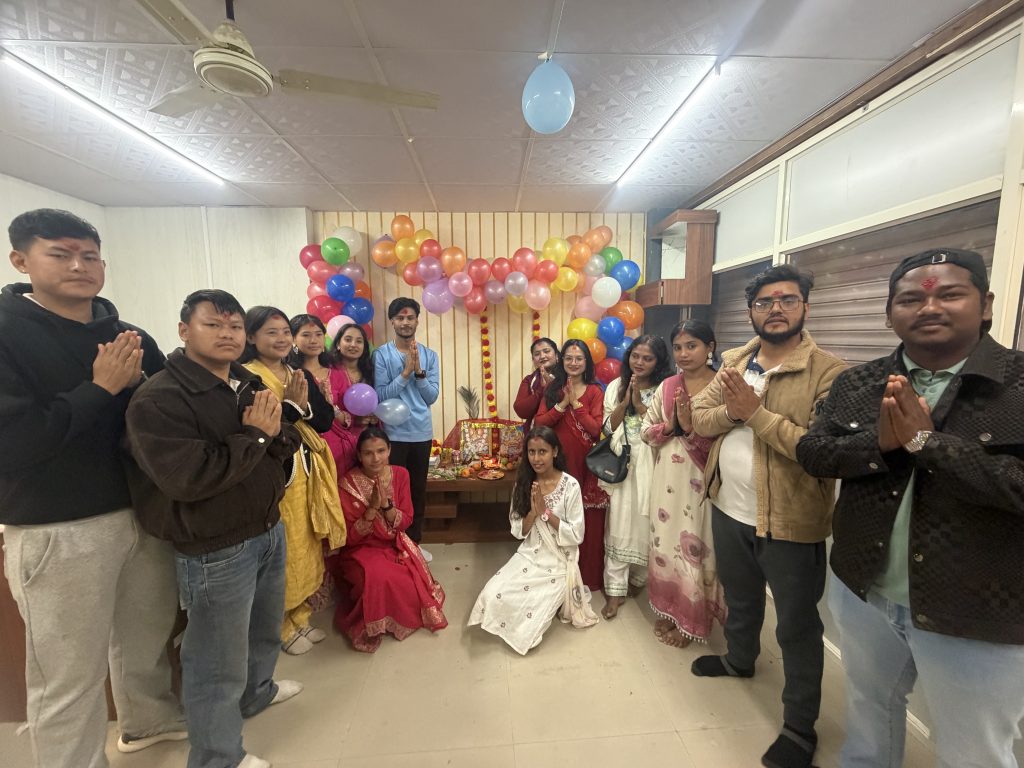
The Itahari branch of Global Peace Int’l Education Academy celebrated Saraswati Puja 2082 with great enthusiasm, turning the campus into a lively center of devotion and cultural expression. The program began with a formal पूजा ceremony, where students and teachers gathered to offer prayers and seek blessings for knowledge, creativity, and academic excellence. Following the worship, students presented cultural performances that included devotional songs and short presentations, adding energy and joy to the event. The active involvement of students in organizing and performing in the program reflected strong teamwork and leadership skills, making the celebration more engaging and memorable. The entire program promoted respect for education, tradition, and collective harmony within the academic environment. Through such events, Global Peace Itahari continues to encourage holistic development by combining quality education with cultural and moral values, making learning both meaningful and inspiring for students.

Global Peace Itahari Celebrates Saraswati Puja 2082 Read More »

20260123 094519.jpg

Saraswati Puja 2082 Celebration at Global Peace Urlabari

Global Peace Int’l Education Academy, Urlabari, marked Saraswati Puja 2082 in a calm and spiritually uplifting environment, bringing students and staff together to honor Goddess Saraswati, the symbol of wisdom and learning. The celebration began with traditional पूजा and मंत्र, creating a peaceful start to the academic day filled with positivity and devotion. Students actively took part in the worship by offering flowers, prasad, and prayers, seeking blessings for success in their studies and personal growth. The campus was beautifully decorated, and devotional music added to the sacred atmosphere of the program. Along with the religious rituals, students also participated in simple cultural activities that promoted confidence, teamwork, and respect for tradition. The event served as a reminder that education is not only about academics but also about building character, discipline, and cultural awareness. The Saraswati Puja celebration at Urlabari became a meaningful occasion that strengthened the bond between students and the institution.

Saraswati Puja 2082 Celebration at Global Peace Urlabari Read More »

img 2265

Global Peace Celebrates Saraswati Puja 2082

Global Peace successfully organized its annual Saraswati Puja program 2082 with great devotion, enthusiasm, and unity across all its branches—Birtamode, Urlabari, and Itahari. The program became a beautiful blend of spirituality, culture, and youthful energy, making it one of the most memorable celebrations of the academic year. Significance of Saraswati Puja in Hinduism In Hinduism, Saraswati Puja is a sacred festival dedicated to Goddess Saraswati, the goddess of knowledge, wisdom, learning, music, and arts. The puja is traditionally celebrated on Basant Panchami, which marks the arrival of spring and new beginnings. It is believed that worshipping Goddess Saraswati on this auspicious day brings clarity of thought, creativity, academic success, and spiritual growth. Students especially seek her blessings for wisdom, focus, and excellence in education. With this belief at heart, Global Peace has been celebrating Saraswati Puja every year to inspire students not only academically but also culturally and spiritually. Preparations Begin a Day Before The celebration began one day prior to Basant Panchami, when all teachers and staff members from their respective branches came together with great dedication. Classrooms and halls were beautifully decorated, and a sacred mandir (temple) for Goddess Saraswati was carefully created. The preparation itself reflected teamwork, devotion, and respect for tradition. The atmosphere across all branches felt spiritual and festive, filled with anticipation for the special day. Basant Panchami: The Main Celebration On the day of Basant Panchami, the program officially commenced. The Birtamode branch hosted a special introductory session, setting the tone for the day with warm words, cultural reflections, and an explanation of the importance of Saraswati Puja. The most sacred moment of the day followed, where all students received blessings from Goddess Saraswati. Students offered flowers, prayers, and heartfelt wishes for success in their studies and personal growth. This moment created a deep sense of calm, devotion, and positivity among everyone present. Memories Captured: Photo Session After the puja, a joyful photo session was organized. Students, teachers, and staff members captured beautiful moments together, preserving memories of devotion, happiness, and togetherness. The smiles and excitement reflected the true spirit of the celebration. Cultural Performances and Formal Program Following the photo session, the formal program began. The stage came alive with more than 10 dance and singing performances, presented by energetic and talented students. Each performance showcased creativity, confidence, and cultural richness. Traditional, modern, and devotional performances kept the audience engaged and entertained throughout the program. The students’ enthusiasm, coordination, and stage presence truly highlighted the vibrant learning environment at Global Peace. Teachers and guests applauded the performers, encouraging students to continue exploring their talents beyond academics. Prasad Distribution and Group Activities After the performances, prasad was distributed to all students and staff, symbolizing blessings and gratitude. Group photo sessions, group dances, and friendly interactions followed, adding more joy and unity to the celebration. A Memorable Conclusion The Saraswati Puja program formally concluded with happiness, satisfaction, and a strong sense of community. The event not only honored cultural and religious values but also strengthened the bond between students, teachers, and staff across all branches. Final Thoughts The Global Peace Saraswati Puja 2082 was more than just a religious program—it was a celebration of knowledge, culture, creativity, and togetherness. Through devotion, preparation, and student participation, the event beautifully reflected the institution’s commitment to holistic education. May Goddess Saraswati continue to bless all students and the entire Global Peace family with wisdom, success, and enlightenment. 🌼📚✨

Global Peace Celebrates Saraswati Puja 2082 Read More »

Study in Japan from Nepal 2026

Japan Table of Contents Japan has become one of the most preferred study destinations for Nepali students who are looking for quality education, global exposure, and long-term career growth. With its advanced technology, disciplined lifestyle, globally respected education system, and strong employment opportunities, Japan offers a complete academic and professional environment for international students. Global Peace International Education Academy is committed to helping Nepali students turn their dream of studying in Japan into reality. From proper counselling and Japanese language preparation to university selection, documentation, visa processing, and post-arrival guidance, we provide complete support throughout your study abroad journey. Whether you are planning to study Japanese language, enroll in a diploma course, pursue a bachelor’s degree, or continue with postgraduate studies, Global Peace International Education Academy ensures that you receive accurate guidance based on your academic background, financial capacity, and career goals. Why Japan is an Excellent Study Destination for Nepali Students Japan offers a unique combination of academic excellence, cultural richness, safety, and professional development opportunities. For Nepali students, Japan is not only a place to study but also a country where they can develop discipline, independence, and global competitiveness. World-Class Education System Japan is home to some of the world’s most respected universities and research institutions. Japanese education focuses on practical skills, research-based learning, and innovation. Students benefit from modern laboratories, advanced technology, and industry-oriented curriculum. Fields such as engineering, robotics, information technology, biotechnology, business management, and environmental science are particularly strong in Japan. Many universities also collaborate with industries, which allows students to gain real-world experience through internships, training programs, and research projects. https://cdn.pixabay.com/video/2021/01/29/63328-506377472_large.mp4 Globally Recognised Degrees Degrees obtained from Japanese universities are recognised internationally. Graduates can pursue careers not only in Japan but also in multinational companies across Asia, Europe, Australia, and North America. A Japanese degree combined with Japanese language proficiency significantly increases global employability. For students planning long-term settlement or professional growth in Japan, academic qualifications from Japanese institutions play a crucial role in work visa and job placement opportunities. Safe and Student-Friendly Environment Japan consistently ranks among the safest countries in the world. Crime rates are extremely low, public transport is reliable, and healthcare facilities are well-developed. For Nepali students living away from home for the first time, Japan provides a secure and organised environment that supports both academic focus and personal well-being. Cities are well connected through efficient transportation systems, making it easy for students to commute to universities, workplaces, and accommodation. https://cdn.pixabay.com/video/2021/05/03/73007-545277076_large.mp4 Cultural Diversity and Personal Development Studying in Japan allows students to experience a culture that blends tradition and modernity. Students participate in festivals, cultural programs, and community activities while also enjoying modern lifestyle, entertainment, and technology. This cultural exposure helps students develop adaptability, communication skills, and global awareness, which are essential qualities for future careers. Opportunity to Learn a Valuable Language Japanese is one of the most valuable foreign languages in the global job market. Learning Japanese opens doors to careers in translation, tourism, international business, IT companies, manufacturing industries, and diplomatic services. Most universities and language schools offer structured Japanese language courses to support international students at different proficiency levels. When to Apply for Japan: Intakes Explained Japan has four intakes: January, April, July, and October. Click on the cards below to know more about each intake. January April July October The January intake is ideal for students who want to start their studies early in the year.It usually offers fewer seats compared to other intakes, so early application is important.Students get enough time to adjust before the main academic rush.This intake is suitable for those who recently completed their studies.Course Duration: 15 months. April is the primary intake in Japan with the highest number of courses and universities available.Most academic programs and language schools begin during this period.Students get better chances of admission and more subject options.It also matches the Japanese academic calendar.Course Duration: 24 months. The July intake is good for students who miss the April intake but still want to apply within the same year.It offers a moderate number of courses and institutions.Students can prepare for higher studies or job opportunities after language training.This intake is suitable for fast academic planners.Course Duration: 21 months. The October intake is another popular option after April.Many language schools and selected universities accept students during this period.It is helpful for students who need more time to prepare documents and finances.Students can smoothly transition into the next academic cycle.Course Duration: 18 months. The January intake is ideal for students who want to start their studies early in the year.It usually offers fewer seats compared to other intakes, so early application is important.Students get enough time to adjust before the main academic rush.This intake is suitable for those who recently completed their studies.Course Duration: 15 months. April is the primary intake in Japan with the highest number of courses and universities available.Most academic programs and language schools begin during this period.Students get better chances of admission and more subject options.It also matches the Japanese academic calendar.Course Duration: 24 months. The July intake is good for students who miss the April intake but still want to apply within the same year.It offers a moderate number of courses and institutions.Students can prepare for higher studies or job opportunities after language training.This intake is suitable for fast academic planners.Course Duration: 21 months. The October intake is another popular option after April.Many language schools and selected universities accept students during this period.It is helpful for students who need more time to prepare documents and finances.Students can smoothly transition into the next academic cycle.Course Duration: 18 months. https://cdn.pixabay.com/video/2025/04/07/270585_large.mp4 Why Choose Global Peace International Education Academy for Japan? Choosing the right consultancy plays a major role in the success of your study abroad plan. Global Peace International Education Academy follows a student-focused approach, ensuring transparency, ethical counselling, and long-term career planning. Personalised Career Counselling Every student has different academic records, financial conditions, and career ambitions. Our counsellors carefully analyse each student’s profile before recommending suitable courses,

Study in Japan from Nepal 2026 Read More »