
Notice

admin

Documents Required for VFS Global Japan Nepal

Documents Required for VFS Global Japan Nepal: Complete Guide Applicants planning to travel to Japan from Nepal must submit their visa applications through the Japan Visa Application Centre in Kathmandu operated by VFS Global. Proper documentation is the most important factor determining smooth visa processing and approval. This guide explains the documents required for VFS Global Japan Nepal across different visa categories including language school students, university students, skilled labor applicants, dependents, and other visa types. Understanding these requirements in advance helps applicants avoid delays and rejections. Overview of Japan Visa Application Centre Kathmandu The Japan Visa Application Centre in Kathmandu serves as the official submission point for Japan visa applications from Nepal. Applicants must book appointments, prepare required documents, and submit them in organized format according to the checklist. While requirements vary depending on visa category, some core documents remain common for all applicants. Documents Required for Language School Student Students applying for Japanese language schools must prepare the following documents before visiting VFS Global. Visa Application Form Each applicant must complete an individual visa application form. This requirement applies even to child applicants. The form must be printed on both sides, and the contact number provided must belong to the applicant. Proper completion of the form ensures accurate processing and avoids unnecessary corrections during submission. Valid Passport Applicants must submit a valid passport containing at least one blank page. In addition, three copies of the passport bio page must be provided. Passport validity and condition are checked carefully during submission. Photograph Applicants must submit a photograph sized 45mm by 35mm. The photo must show a full face looking straight forward with a white background. It should be clear, identifiable, and taken within the last six months. Photographs that do not meet specifications may lead to application delay. Certificate of Eligibility The original Certificate of Eligibility must be submitted along with one copy or two color copies showing both sides of the COE. This document confirms immigration approval for study in Japan. Read more : What after COE Japanese Language Institute Certificate in Nepal Applicants must submit the original certificate from the Japanese language institute in Nepal where they studied. Japanese Language Proficiency Certificate Applicants must submit original Japanese language test certificates such as JLPT, TOP-J, NAT-TEST, J-CERT, JLCT, PJC Bridge, BJT-JLRT, or J.TEST. Alternatively, proof from the Japanese language school in Japan along with certificate copies may be submitted. Read More : Study in Japan Guide Documents Required for University Student University students applying for Japan visas must prepare a similar document set with slight differences. Visa Application Form Each applicant must complete a separate form printed on both sides with applicant contact information. Valid Passport A valid passport with at least one blank page and three copies of the bio page must be submitted. Photograph Photographs must meet the standard 45mm by 35mm requirement with white background and recent capture. Click here to see what 45mm by 35mm photo looks like  Certificate of Eligibility Applicants must submit the original COE along with one copy or two color copies showing both sides. Enrollment Certificate of University A copy of the university enrollment certificate must be submitted as proof of admission. Documents Required With COE (Except Student) Applicants applying under categories other than student but holding COE must prepare the following standard documents. Visa Application Form Each applicant must submit an individually completed form printed on both sides with personal contact details. Valid Passport A passport containing at least one blank page along with three copies of the bio page is required. Photograph A recent photograph with standard size and background specifications must be submitted. Certificate of Eligibility The original COE must be submitted with one copy or two color copies covering both sides. Additional Documents for Specific Visa Categories Certain visa types require additional supporting documents beyond the standard checklist. Skilled Labor (Cook) Applicants must submit an original letter confirming more than ten years of working experience. Additionally, a copy of company registration must be provided along with English translation if the document is not in English or Japanese. Skilled Labor (Rafting Guide) Applicants must submit a copy of the rafting guide certificate issued by Nepal Academy of Tourism and Hotel Management (NATHM). Dependent, Long-Term Resident, Spouse or Child of Japanese National or Permanent Resident Applicants under these categories must submit the standard documents listed above. Work Visa Categories Applicants applying under Engineer, Specialist in Humanities, International Services, Specified Skilled Worker, Technical Intern Trainee, Entertainer, Designated Activities, Cultural Activities, or Business Manager categories must submit the standard document set with COE. Important Submission Guidelines Applicants must follow several important instructions when submitting documents at VFS Global. Documents must be arranged according to the checklist sequence. All documents mentioned in the checklist are mandatory for submission. The visa application process typically takes six working days; however, processing time may extend if further scrutiny is required. All photocopies must be provided in A4 size format. Original documents must be submitted along with photocopies if they are not in A4 size. Applicants must avoid using pins, staples, cello tape, or paper clips on documents. In the case of minor applicants, parents or legal representatives may sign the visa application form while clearly indicating their relationship. Final Thoughts Preparing documents required for VFS Global Japan Nepal is a crucial step in the Japan visa application process. Applicants should carefully review their category-specific checklist, ensure document accuracy, and organize paperwork properly before submission. A well-prepared application not only reduces processing delays but also increases the likelihood of visa approval. Understanding requirements for language school students, university students, and work visa applicants allows individuals to approach the submission process with confidence.

Documents Required for VFS Global Japan Nepal Read More »
After COE Process for Japan: Step-by-Step Student Visa Guide (2026)

After COE Process for Japan: Complete Step-by-Step Guide Receiving your Certificate of Eligibility (COE) is one of the most important milestones for students planning to study in Japan. However, many students become confused about the next steps after receiving COE. This guide explains the after COE process for Japan in a simple and structured way so students can smoothly complete visa procedures and prepare for departure. What is COE and Why It Matters A Certificate of Eligibility (COE) is issued by Japanese immigration authorities confirming that you meet the requirements to stay in Japan as a student. It is a mandatory document for applying for a student visa at the Japanese Embassy or VFS center. Once your COE arrives, several financial, documentation, and visa procedures must be completed. Step 1: Obtain NOC Letter The first step after receiving COE is obtaining a No Objection Certificate (NOC). This document confirms that there is no restriction on your travel abroad for study purposes. Depending on your country, this certificate may be issued by education authorities or government offices. Step 2: Create PAN Card A PAN card is important for international financial transactions. Since tuition and accommodation fees are often transferred abroad, having a PAN card helps maintain proper financial documentation. Students who do not have a PAN card should apply immediately after COE approval. Read More : How to Create Pan Card in Nepal Step 3: Maintain Required Bank Balance Financial stability is a key factor during visa processing. Students must maintain sufficient funds in their bank account to demonstrate their ability to support education and living expenses in Japan. Key considerations include maintaining stable balance, preparing bank statements, and arranging sponsor documents if applicable. Step 4: Pay Tuition and Hostel Fees via SWIFT Most Japanese institutions require advance payment of tuition and accommodation fees. These payments are usually made through SWIFT international bank transfer. Students should keep payment receipts carefully because they may be required during visa submission. Visit Here : All Nepali Banks Swift Codes Step 5: Book VFS Appointment After completing financial requirements, students should book a VFS appointment for visa submission. It is recommended to select the earliest available date, avoid cancellation or rescheduling, and prepare all documents before the appointment day. Step 6: Submit Documents at VFS During the appointment, students must submit all required documents such as passport, COE copy, admission letter, financial documents, payment proof, and visa application form. Proper documentation and organization can help avoid delays and improve approval chances. Step 7: Collect Passport with Visa After processing, students receive notification to collect their passport. If approved, the Japan student visa will be stamped inside the passport. Students should verify visa validity, personal details, and passport information at the time of collection. Step 8: Flight Counseling and Booking The final stage of the after COE process for Japan involves travel preparation. Many students receive guidance regarding travel dates, airport procedures, packing, and arrival instructions. Booking flights and preparing essential travel documents completes the process. Final Thoughts The after COE process for Japan includes financial preparation, document submission, visa processing, and travel planning. While the steps may appear complex, following them systematically ensures a smooth transition from COE approval to arrival in Japan. Maintaining organized documentation, completing financial requirements on time, and carefully following visa procedures can significantly reduce stress during the process. Global Peace Consultancy has established itself as one of the most trusted names for students planning to study in Japan. With a proven success rate of over 95 percent, the consultancy has consistently guided students through every stage of the process, from COE preparation to visa approval and final departure. Their experienced team understands the complexities of documentation, financial procedures, and embassy requirements, ensuring that students receive accurate support without unnecessary delays. If you are applying through Global Peace, you can move forward with confidence knowing that you are supported by professionals who prioritize your success. Even if you are not currently applying but are considering Japan as your study destination, you are encouraged to scroll down and click the contact button for guidance, or directly call the number provided to speak with a counselor and explore your options.

After COE Process for Japan: Step-by-Step Student Visa Guide (2026) Read More »

PAN Card Registration in Nepal

PAN Card Registration in Nepal: Complete Guide to Application, Documents and Benefits PAN Card Registration in Nepal is an essential requirement for individuals and businesses to maintain tax compliance and perform various financial transactions. The Permanent Account Number (PAN) is a unique nine-digit identification number issued by the Inland Revenue Department (IRD) that helps track tax activities and financial records. Whether you are a salaried employee, freelancer, student, entrepreneur, or foreign national working in Nepal, obtaining a PAN card has become a fundamental step for participating in the formal financial system. This guide explains PAN registration in Nepal in detail, including application methods, required documents, eligibility, and benefits. What is a PAN Card in Nepal A PAN card is a unique taxpayer identification number provided by the Inland Revenue Department of Nepal. It acts as an official record for individuals and organizations involved in taxable income activities. The PAN system allows the government to monitor tax obligations, prevent tax evasion, and maintain financial transparency. At the same time, it provides individuals with access to banking services, employment benefits, and digital government facilities. Who Needs PAN Card Registration in Nepal PAN registration is mandatory for a wide range of individuals and entities involved in financial activities. Salaried employees require PAN for salary payments and tax deductions. Freelancers and consultants must have PAN for professional income documentation. Business owners and entrepreneurs need PAN to operate legally and comply with taxation requirements. Foreign nationals working or investing in Nepal must also obtain PAN to manage employment income, business transactions, or investment activities. Additionally, individuals performing high-value transactions such as purchasing property, vehicles, or applying for loans are required to provide PAN details. How to Apply for a PAN Card in Nepal Applicants can complete PAN registration through two primary digital platforms provided by the government. These methods simplify the process and reduce the need for physical paperwork. IRD Taxpayer Portal Application The Inland Revenue Department provides an online taxpayer portal accessible through its official website. Applicants can visit the portal, navigate to the registration section, and choose between Personal PAN or Business PAN based on their category. The portal allows users to fill out application forms, upload documents, and generate application records before visiting the tax office for verification. Portal Link : Click here Nagarik App Application Method Another convenient method for PAN registration is through the Nagarik App, available on both Android and iOS platforms. After downloading the app and verifying identity using citizenship details, applicants can complete PAN registration directly within the application. This method is often faster and paperless, significantly reducing the need for in-person visits and manual documentation. This Blog post covers nagarik app method as it’s more faster Required Documents for PAN Registration Document requirements differ depending on applicant category. Preparing accurate documents ensures faster verification and issuance. Documents for Individuals (Personal PAN) Individuals applying for Personal PAN must submit a copy of their citizenship certificate showing both sides. A recent passport-sized photograph is required for identification. Applicants must also provide proof of address such as a utility bill or rental agreement. In cases of employment, an employer letter may be required to confirm work status. Documents for Foreign Nationals Foreign nationals applying for PAN must submit a copy of their passport and a valid visa confirming legal stay in Nepal. If employed, a work permit is required. Additionally, proof of local address such as a rental agreement or employer-provided accommodation confirmation must be submitted. Step-by-Step PAN Registration Process Nagarik App Process for PAN Card Registration in Nepal Applying for a PAN card through the Nagarik App is one of the fastest and most convenient methods available in Nepal. The app allows applicants to complete identity verification, submit documents, and receive their PAN number digitally without complex paperwork. Below is a clear step-by-step explanation of the Nagarik App PAN registration process. Step 1: Install the Nagarik App Begin by downloading the Nagarik App from the Google Play Store or Apple App Store depending on your device. After installation, open the application and proceed with account creation using your mobile number and personal details. Download link Android: Click Here DOwnload Link IOS : Click Here  Step 2: Ensure Phone Number Matches Citizenship Name It is very important that the mobile number used for registration is registered under the exact same name as shown on your citizenship certificate. Even small spelling differences may cause verification failure. For example, if your citizenship name is written as Deepak but your SIM registration name appears as Dipak or Depak, the system may not verify your identity correctly. Ensuring name consistency beforehand helps avoid errors. Step 3: Connect Citizenship First Before applying for PAN, you must connect your citizenship within the Nagarik App. Citizenship linking is a mandatory step and is required to access PAN services. Connecting citizenship during the initial registration process makes later steps easier and reduces verification delays. The app will request citizenship number and additional verification details to complete this step. Step 4: Upload Photograph After citizenship connection, you will be prompted to upload your photograph. The photo must have a clear white background and should be easily identifiable. If you do not have a suitable photo, you can capture one using your phone camera and use background remover applications to replace the background with white. While taking the photo, avoid wearing white clothing so that your image remains clearly visible against the background. Visit here to change your photo background : Click here  Step 5: Navigate to PAN Section Once identity verification and photo upload are completed, open the PAN section inside the Nagarik App. Select the option to register or create PAN to begin the application process. This section is specifically designed for digital PAN registration and connects directly with Inland Revenue Department systems. Step 6: Select Nearest IRD Location During the application, you will be asked to choose the Inland Revenue Office responsible for your area. Applicants should select the office closest to their residence. For

PAN Card Registration in Nepal Read More »

123

Global Peace Itahari Celebrates Saraswati Puja 2082

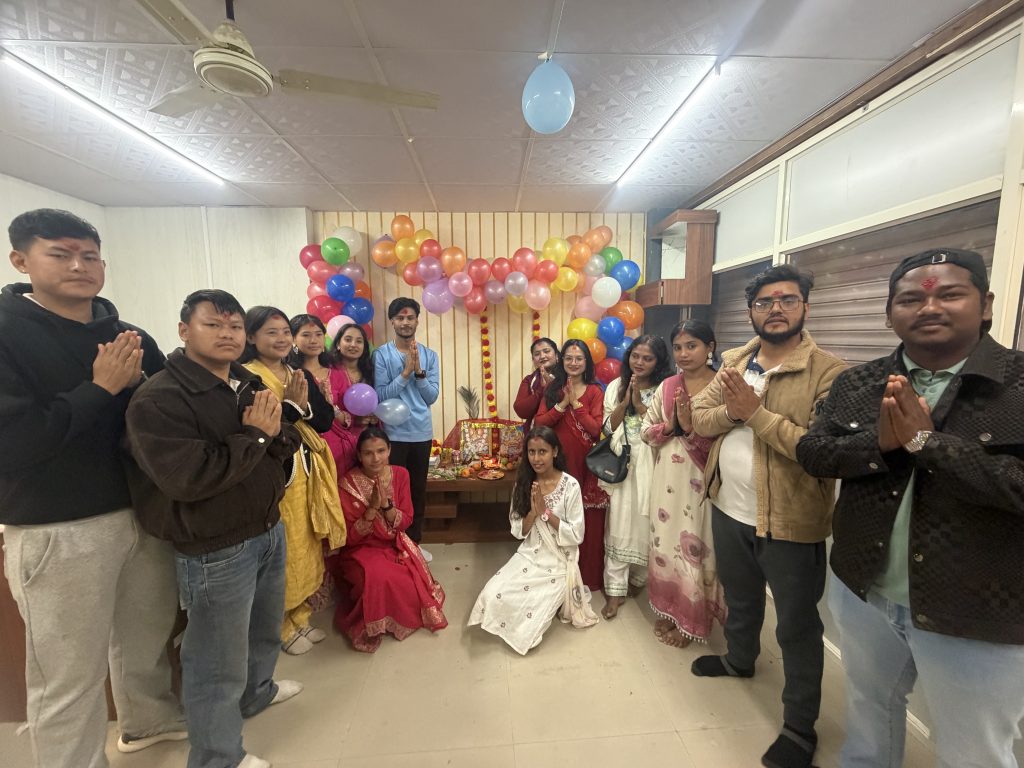
The Itahari branch of Global Peace Int’l Education Academy celebrated Saraswati Puja 2082 with great enthusiasm, turning the campus into a lively center of devotion and cultural expression. The program began with a formal पूजा ceremony, where students and teachers gathered to offer prayers and seek blessings for knowledge, creativity, and academic excellence. Following the worship, students presented cultural performances that included devotional songs and short presentations, adding energy and joy to the event. The active involvement of students in organizing and performing in the program reflected strong teamwork and leadership skills, making the celebration more engaging and memorable. The entire program promoted respect for education, tradition, and collective harmony within the academic environment. Through such events, Global Peace Itahari continues to encourage holistic development by combining quality education with cultural and moral values, making learning both meaningful and inspiring for students.

Global Peace Itahari Celebrates Saraswati Puja 2082 Read More »

20260123 094519.jpg

Saraswati Puja 2082 Celebration at Global Peace Urlabari

Global Peace Int’l Education Academy, Urlabari, marked Saraswati Puja 2082 in a calm and spiritually uplifting environment, bringing students and staff together to honor Goddess Saraswati, the symbol of wisdom and learning. The celebration began with traditional पूजा and मंत्र, creating a peaceful start to the academic day filled with positivity and devotion. Students actively took part in the worship by offering flowers, prasad, and prayers, seeking blessings for success in their studies and personal growth. The campus was beautifully decorated, and devotional music added to the sacred atmosphere of the program. Along with the religious rituals, students also participated in simple cultural activities that promoted confidence, teamwork, and respect for tradition. The event served as a reminder that education is not only about academics but also about building character, discipline, and cultural awareness. The Saraswati Puja celebration at Urlabari became a meaningful occasion that strengthened the bond between students and the institution.

Saraswati Puja 2082 Celebration at Global Peace Urlabari Read More »

20260123 094519.jpg

Global Peace Urlabari Saraswati Puja 2082

Back to Gallery Saraswati Puja 2082 At Global Peace Urlabari Global Peace Int’l Education Academy, Urlabari, celebrated Saraswati Puja 2082 in a calm and spiritually enriching atmosphere, bringing students and staff together in a moment of devotion and gratitude toward Goddess Saraswati. The program began with traditional rituals and prayers, creating a peaceful environment that reflected the true essence of learning and wisdom. Click to expand Edit gallery Edit gallery

Global Peace Urlabari Saraswati Puja 2082 Read More »

123

Global Peace Itahari Saraswati Puja 2082

Back to Gallery Saraswati Puja 2082 At Global Peace Itahari The Itahari branch of Global Peace marked Saraswati Puja 2082 with vibrant participation and a festive spirit that filled the campus with positivity and cultural pride. The celebration featured a well-organized worship ceremony followed by student-led cultural performances, making the day both sacred and joyful. Click to expand Edit gallery Edit gallery

Global Peace Itahari Saraswati Puja 2082 Read More »

img 2265

Global Peace Celebrates Saraswati Puja 2082

Global Peace successfully organized its annual Saraswati Puja program 2082 with great devotion, enthusiasm, and unity across all its branches—Birtamode, Urlabari, and Itahari. The program became a beautiful blend of spirituality, culture, and youthful energy, making it one of the most memorable celebrations of the academic year. Significance of Saraswati Puja in Hinduism In Hinduism, Saraswati Puja is a sacred festival dedicated to Goddess Saraswati, the goddess of knowledge, wisdom, learning, music, and arts. The puja is traditionally celebrated on Basant Panchami, which marks the arrival of spring and new beginnings. It is believed that worshipping Goddess Saraswati on this auspicious day brings clarity of thought, creativity, academic success, and spiritual growth. Students especially seek her blessings for wisdom, focus, and excellence in education. With this belief at heart, Global Peace has been celebrating Saraswati Puja every year to inspire students not only academically but also culturally and spiritually. Preparations Begin a Day Before The celebration began one day prior to Basant Panchami, when all teachers and staff members from their respective branches came together with great dedication. Classrooms and halls were beautifully decorated, and a sacred mandir (temple) for Goddess Saraswati was carefully created. The preparation itself reflected teamwork, devotion, and respect for tradition. The atmosphere across all branches felt spiritual and festive, filled with anticipation for the special day. Basant Panchami: The Main Celebration On the day of Basant Panchami, the program officially commenced. The Birtamode branch hosted a special introductory session, setting the tone for the day with warm words, cultural reflections, and an explanation of the importance of Saraswati Puja. The most sacred moment of the day followed, where all students received blessings from Goddess Saraswati. Students offered flowers, prayers, and heartfelt wishes for success in their studies and personal growth. This moment created a deep sense of calm, devotion, and positivity among everyone present. Memories Captured: Photo Session After the puja, a joyful photo session was organized. Students, teachers, and staff members captured beautiful moments together, preserving memories of devotion, happiness, and togetherness. The smiles and excitement reflected the true spirit of the celebration. Cultural Performances and Formal Program Following the photo session, the formal program began. The stage came alive with more than 10 dance and singing performances, presented by energetic and talented students. Each performance showcased creativity, confidence, and cultural richness. Traditional, modern, and devotional performances kept the audience engaged and entertained throughout the program. The students’ enthusiasm, coordination, and stage presence truly highlighted the vibrant learning environment at Global Peace. Teachers and guests applauded the performers, encouraging students to continue exploring their talents beyond academics. Prasad Distribution and Group Activities After the performances, prasad was distributed to all students and staff, symbolizing blessings and gratitude. Group photo sessions, group dances, and friendly interactions followed, adding more joy and unity to the celebration. A Memorable Conclusion The Saraswati Puja program formally concluded with happiness, satisfaction, and a strong sense of community. The event not only honored cultural and religious values but also strengthened the bond between students, teachers, and staff across all branches. Final Thoughts The Global Peace Saraswati Puja 2082 was more than just a religious program—it was a celebration of knowledge, culture, creativity, and togetherness. Through devotion, preparation, and student participation, the event beautifully reflected the institution’s commitment to holistic education. May Goddess Saraswati continue to bless all students and the entire Global Peace family with wisdom, success, and enlightenment. 🌼📚✨

Global Peace Celebrates Saraswati Puja 2082 Read More »

img 2258

Saraswati Puja 2082

Back to Gallery Saraswati Puja 2082 Global Peace successfully organized its annual Saraswati Puja program 2082 with great devotion, enthusiasm, and unity across all its branches—Birtamode, Urlabari, and Itahari. The program became a beautiful blend of spirituality, culture, and youthful energy, making it one of the most memorable celebrations of the academic year. Click to expand Edit gallery Edit gallery

Saraswati Puja 2082 Read More »

Hey there! Ask me anything!